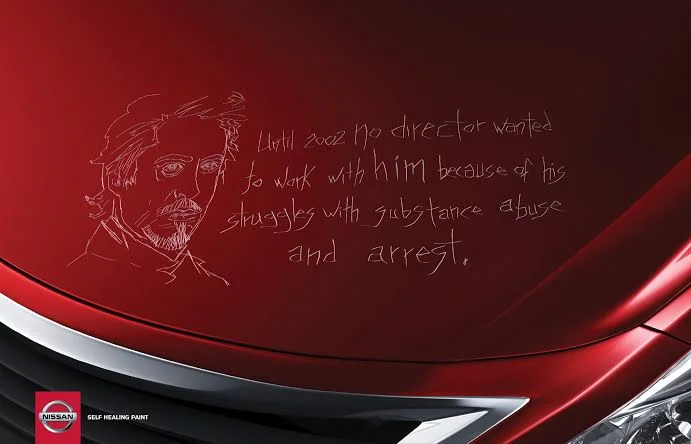
Nissan has been coating the Ariya and several other models with a clear layer that closes shallow scratches on its own, and the technology behind it is far less exotic than the marketing suggests. It is a polyurethane-based clearcoat with elastic memory built into its molecular structure. Heat does the rest. On a warm day, or after a bucket of hot water, the surface relaxes and the groove you were frowning at slowly disappears. Nissan has been refining this formulation since 2007, and it now reaches production cars rather than concept stands.
The Scratch You Keep Staring At
That matters because scratch repair is one of the most common cosmetic complaints drivers bring into workshops, and most of those complaints are about damage that never went through the clearcoat at all. If you understand where self-healing paint works and where it does not, you will stop wasting money on polishing compounds and start using the right conditions to let the coating do its job.
How The Healing Actually Works
The key ingredient is a cross-linked polymer network with a carefully tuned glass transition temperature. In plain terms, the resin sits in a state where it is firm enough to resist everyday abrasion yet mobile enough that, when warmed, the polymer chains slide back toward their original arrangement. Think of it as elastic memory rather than a chemical reaction. Nothing is added, nothing evaporates, and no catalyst is required.
Warmth is the trigger, and the numbers are modest. Direct summer sun can push a dark panel well above 40 degrees Celsius, which is usually enough to close fine swirl marks within a few hours. A jug of warm water poured over the affected panel works faster on a cooler day, and some owners report good results from simply parking the car in the sun after a wash. If you want to understand how surface layers protect what sits beneath them, the same principle applies to the coatings discussed in our guide to engineers created paint that can generate electricity from the sun, where the chemistry of the outer layer does real work rather than sitting there for appearance alone.
What It Will And Will Not Fix
Shallow marks respond well
Fingernail-test damage is the dividing line. Run your nail gently across the scratch. If it catches, the mark has reached the base coat or primer and no self-healing clearcoat on the market will close it. If your nail glides over it, the scratch is confined to the clear layer, and that is exactly the territory this coating was designed for.
Typical candidates include swirl marks from automated brushes, faint scuffs from a shopping trolley, light contact with a hedge or a low branch, and the dull haze that appears around door handles. These are the marks that used to send people straight to a body shop for a machine polish. Now they often fade on their own within a day or two of normal sun exposure.
Deep damage stays deep
Keyed panels, stone chips, and scratches that expose bare metal are permanent. So is any damage where the paint has cracked or lifted. Self-healing works on deformation of the resin, and it cannot rebuild material that has been physically removed. The same logic applies to bird droppings and tree sap left in place too long, since the acid etches into the coating rather than scratching it. Our breakdown of removing paint overspray from car windows covers the cleaning side of the equation, and the same care applies to the bodywork itself.
Cold weather slows everything down
Healing is a temperature-dependent process, and a car parked outside through a cold winter will show almost no recovery. This is not a defect. It is physics. The scratch is still there in January, and it will often close on the first genuinely warm afternoon in spring. Owners who panic and attack the panel with abrasive polish in the meantime can remove the very layer doing the healing, which is the worst possible outcome.
What Owners Should Actually Do
Wash the car properly with a pH-neutral shampoo and two buckets, dry it with a clean microfibre towel, then park it in direct sun and leave it alone. If the weather is cool, warm water poured slowly over the panel is a reasonable substitute. Give it a day before deciding anything is wrong.
Skip the abrasive compounds, skip the rotary polisher, and skip the aggressive clay treatments unless a professional has confirmed the coating is already compromised. Ceramic coatings and waxes can be applied over self-healing clearcoat, though some products mask the effect by adding a harder outer layer that resists the heat transfer the polymer needs. If you are unsure what has already been applied to your paint, a quick look at new paint finishes arriving on 2027 models shows how quickly factory formulations are changing, and it is worth confirming the finish on your own car before treating it.

Modern Automotive Technology for Maintenance and Light Repai

Brake Caliper Compression Tool, Heavy Duty Brake Pad Spreade

Performance Tool W158C Brake Spring Compressor - Essential T

LZHOME Hexagon LED Garage Light: 25 Pack Updated Bigger Size
"It was there yesterday and now I can't find it. I thought I was imagining things."
That reaction is common, and it is the clearest sign the coating is working as intended. Nissan's own testing, reported through the company's technical communications, showed recovery on fine scratches after exposure to warm conditions, and independent detailing outlets have reproduced similar results on production vehicles. For a broader view of how modern body panels are engineered for durability rather than appearance alone, our piece on why car doors are designed to fail in specific ways is a useful reminder that every surface on a modern car is a calculated compromise.
The honest summary is that self-healing paint is a genuine advance, though it is a narrow one. It handles the cosmetic wear that accumulates through ordinary use, and it does nothing for the damage that actually costs money. Treat it as a maintenance benefit rather than a force field, and you will get years of value from it. Expect it to shrug off a keyed door, and you will be disappointed every time.

Comments (0)
Please login to join the discussion
Be the first to comment on this article!
Share your thoughts and start the discussion