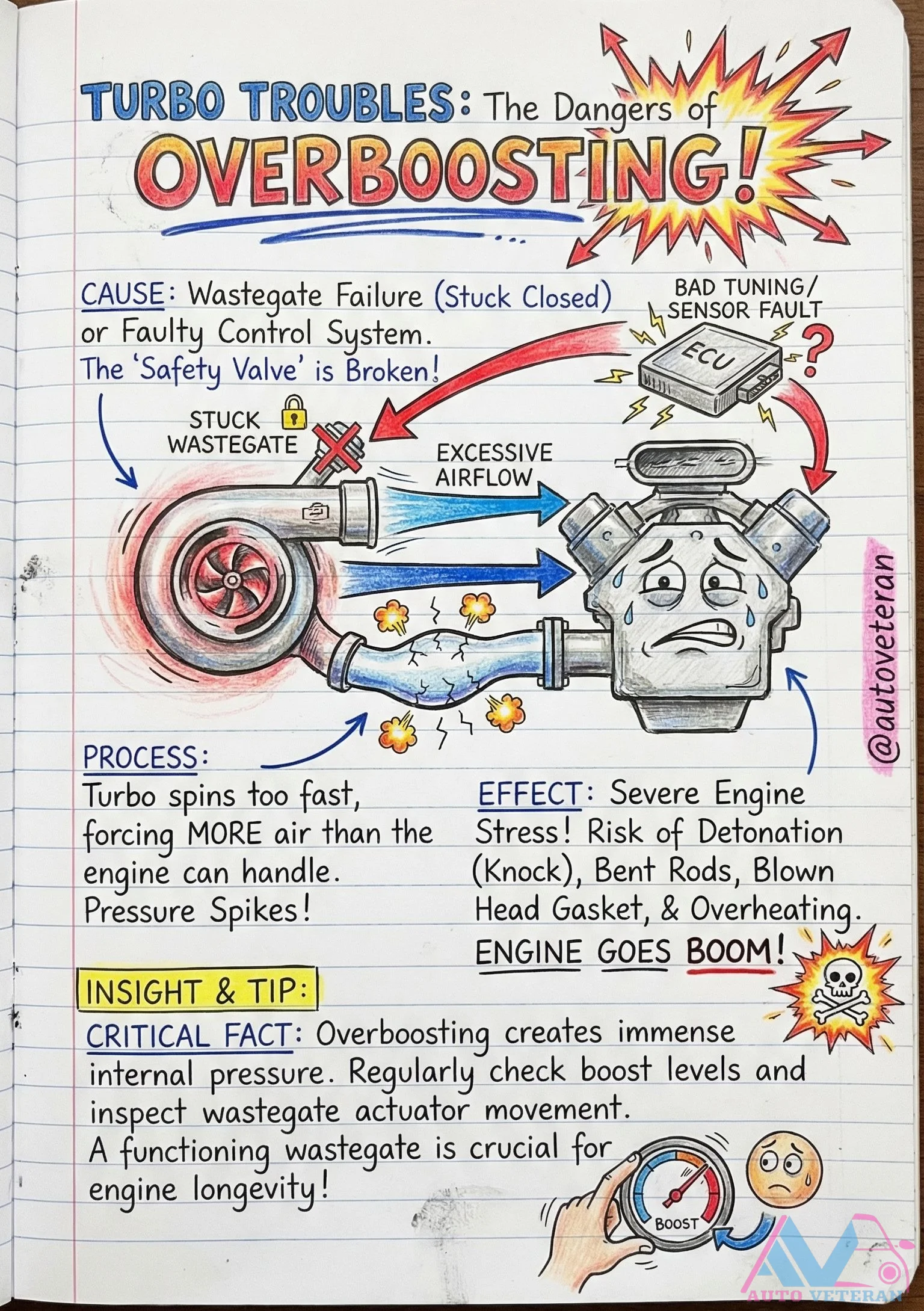
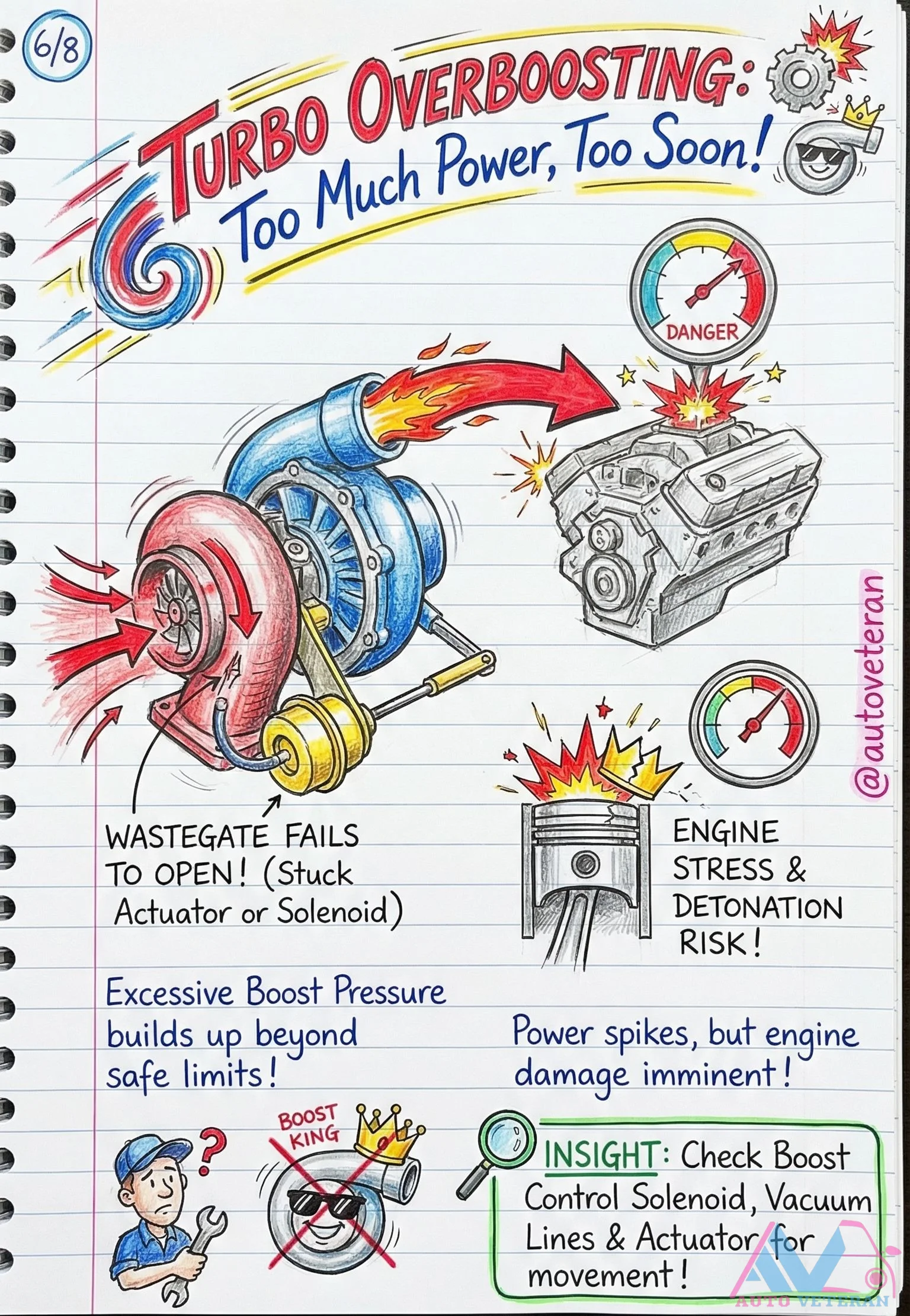
When a turbocharger's wastegate fails stuck closed or the control system malfunctions, the turbo spins uncontrollably fast, forcing excessive airflow into the engine. This creates dangerous pressure spikes that can lead to engine detonation, bent connecting rods, blown head gaskets, severe overheating, and catastrophic engine failure. Regular monitoring of boost levels and inspection of wastegate actuator movement are critical preventive measures to protect engine longevity.
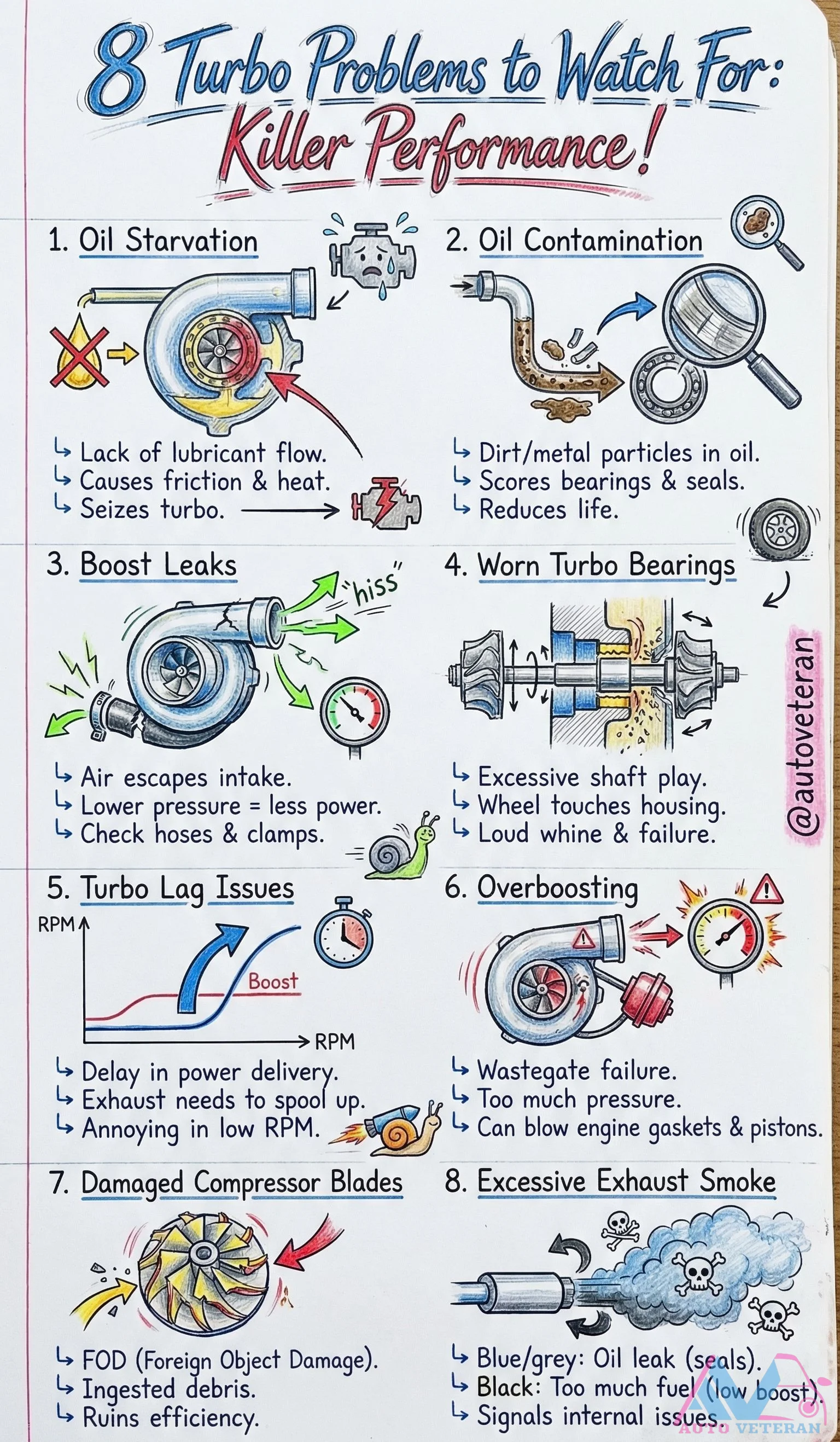
Oil starvation and contamination are critical turbocharger issues that can lead to catastrophic failure. Lack of lubricant flow causes friction and heat buildup, scoring bearings and seals, while dirt or metal particles in the oil accelerate wear, potentially seizing the turbo and drastically reducing its lifespan. These problems often manifest through symptoms like excessive shaft play, loud whining noises, or eventual complete failure, requiring immediate attention to prevent engine damage.
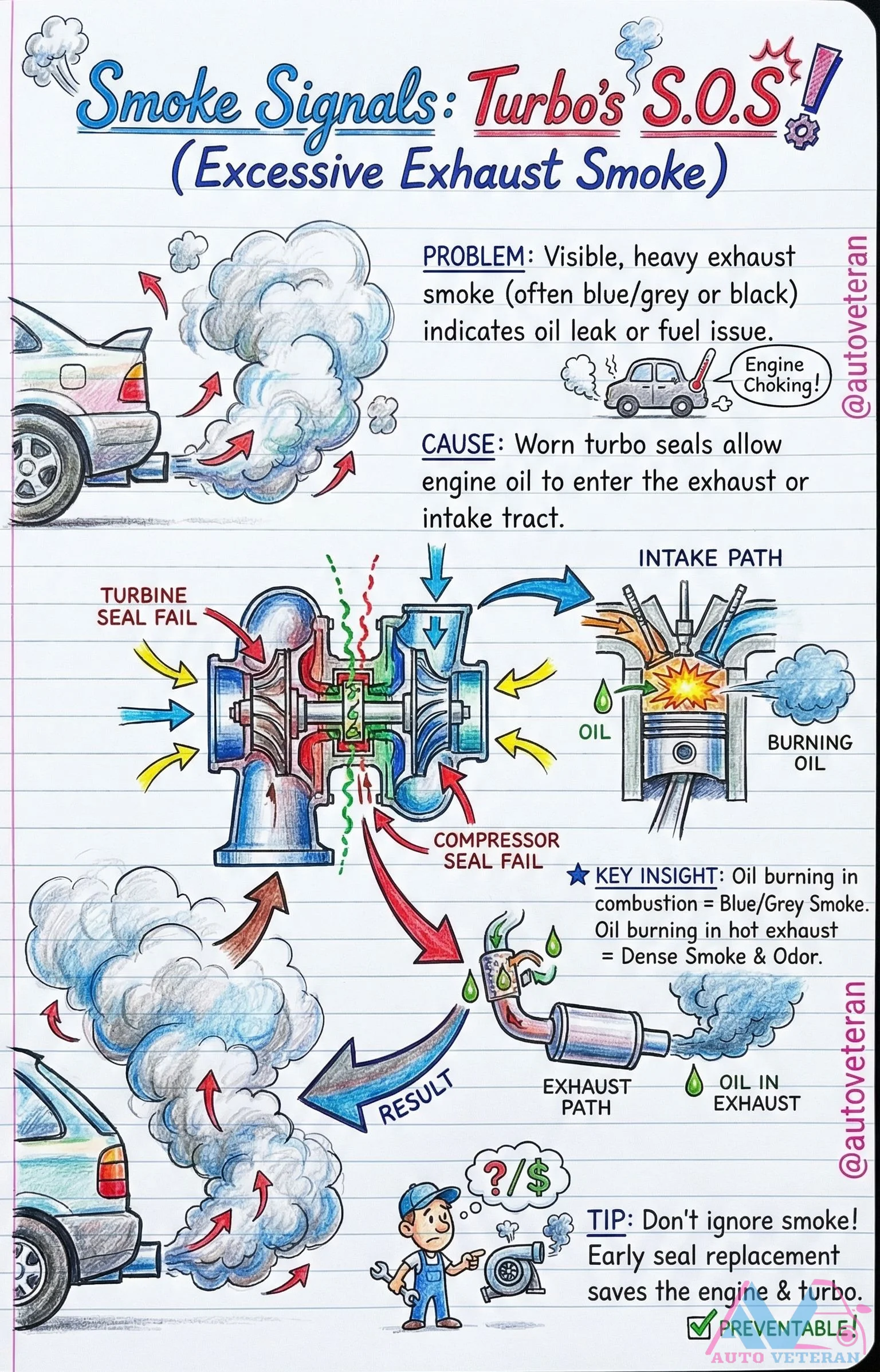
When turbocharger seals fail, engine oil can leak into either the intake or exhaust system, creating distinct smoke signals that demand immediate attention. Blue smoke indicates oil burning directly in the combustion chamber through the intake path, while dense grey smoke with odor results from oil burning in the hot exhaust system through the turbine seal. This preventable condition can lead to engine choking and severe damage if ignored, making early seal replacement crucial for preserving both your turbocharger and engine.
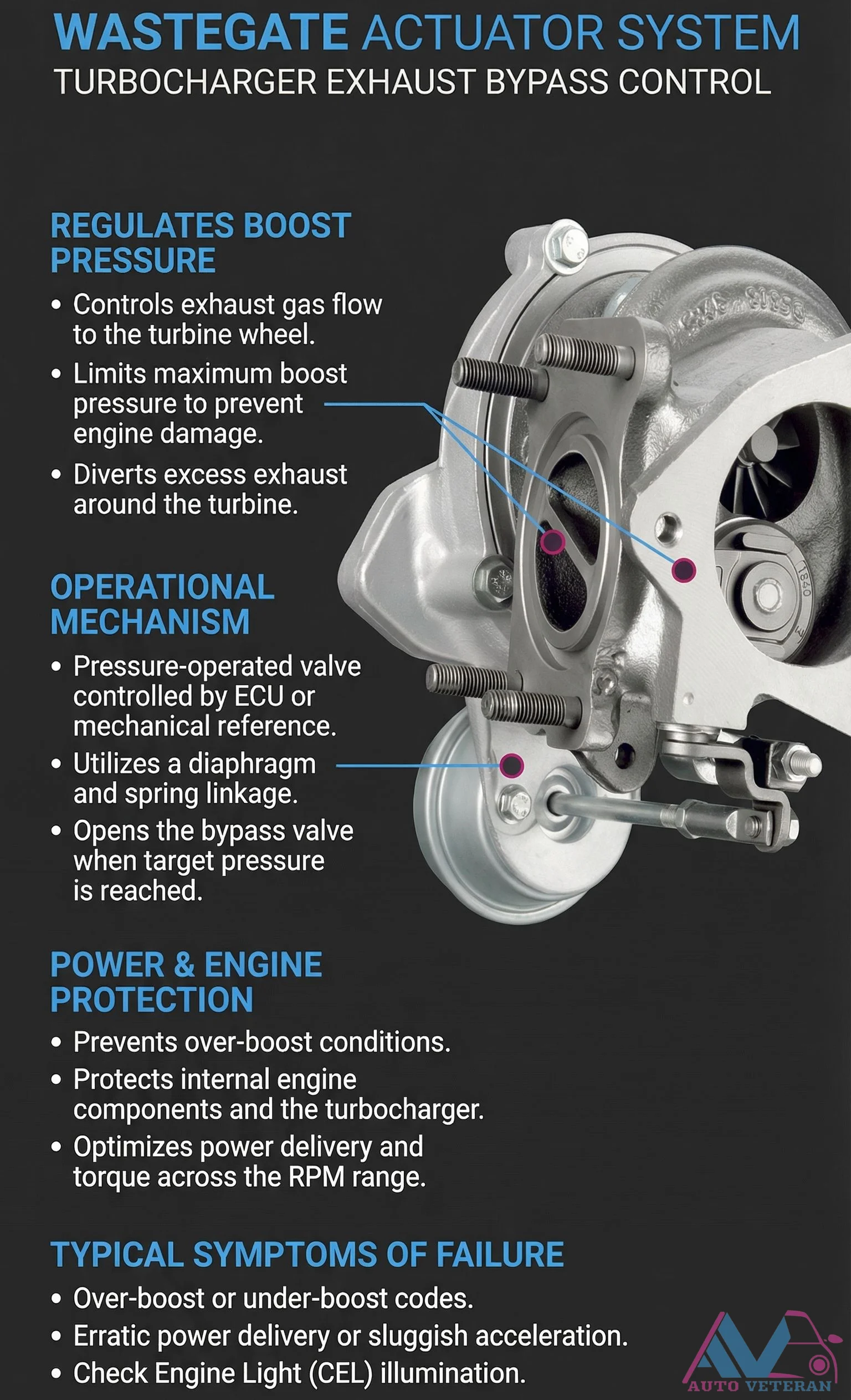
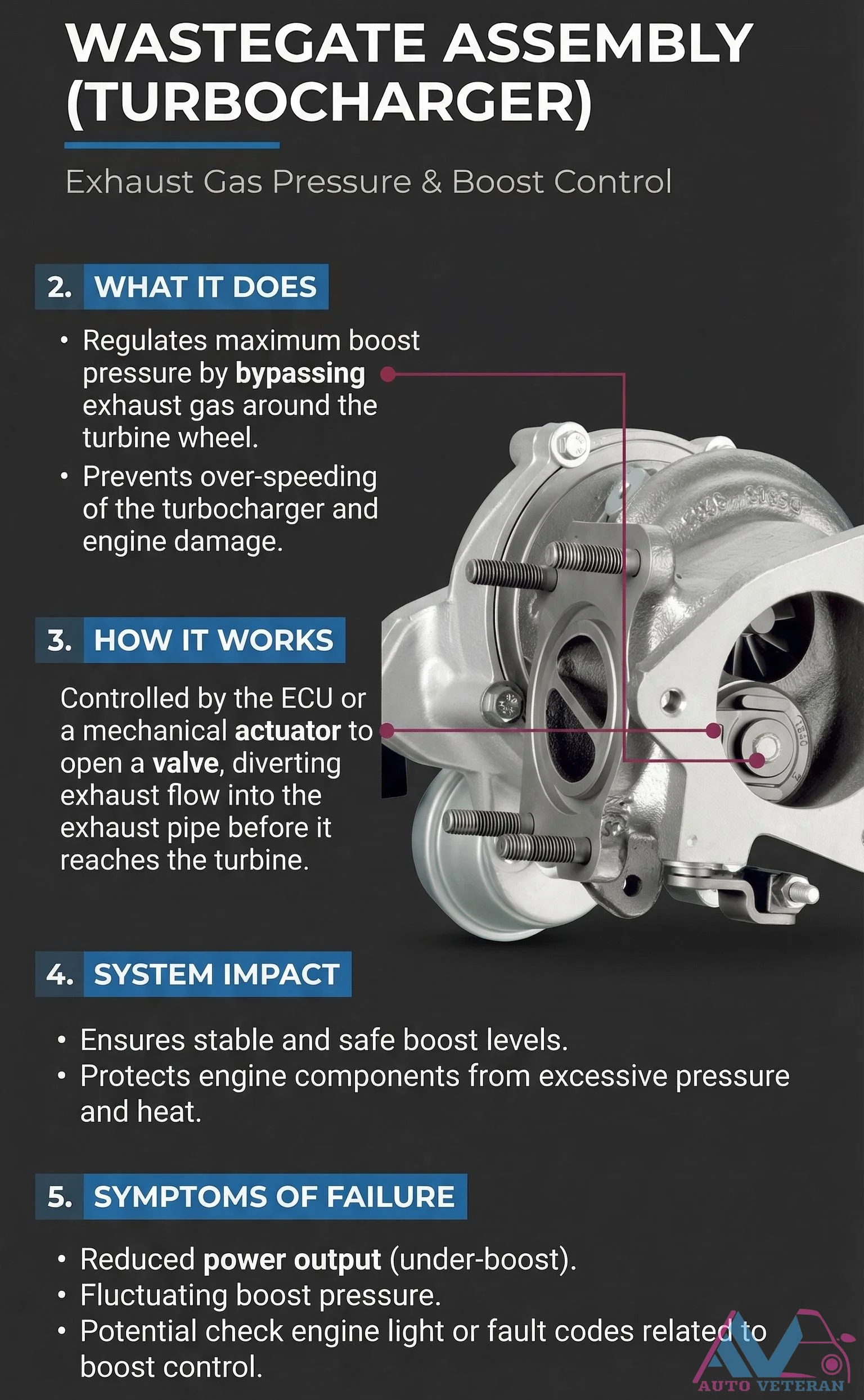
The wastegate actuator system is a critical turbocharger component that regulates exhaust gas flow to the turbine wheel, controlling boost pressure to prevent engine damage. This pressure operated valve, controlled by the ECU or mechanical reference, uses a diaphragm and spring linkage to open the bypass valve when target pressure is reached. Its primary functions include preventing over boost conditions, protecting internal engine components and the turbocharger itself, while optimizing power delivery and torque across the RPM range. When this system fails, typical symptoms include over boost or under boost diagnostic trouble codes, erratic power delivery or sluggish acceleration, and Check Engine Light illumination.
The wastegate assembly is a critical turbocharger component that regulates maximum boost pressure by bypassing exhaust gas around the turbine wheel, preventing turbocharger overspeeding and engine damage. It operates under control from the ECU or a mechanical actuator, opening a valve to divert exhaust flow into the exhaust pipe before reaching the turbine. This ensures stable and safe boost levels while protecting engine components from excessive pressure and heat. When this assembly fails, symptoms include reduced power output due to under boost conditions, fluctuating boost pressure, and potential check engine lights with fault codes related to boost control.
When a turbocharger wastegate fails to open due to a stuck actuator or faulty solenoid, excessive boost pressure builds beyond safe limits; this creates power spikes that stress the engine and pose a severe detonation risk, potentially causing imminent engine damage. To prevent this, inspect the boost control solenoid, vacuum lines, and actuator for proper movement and functionality.
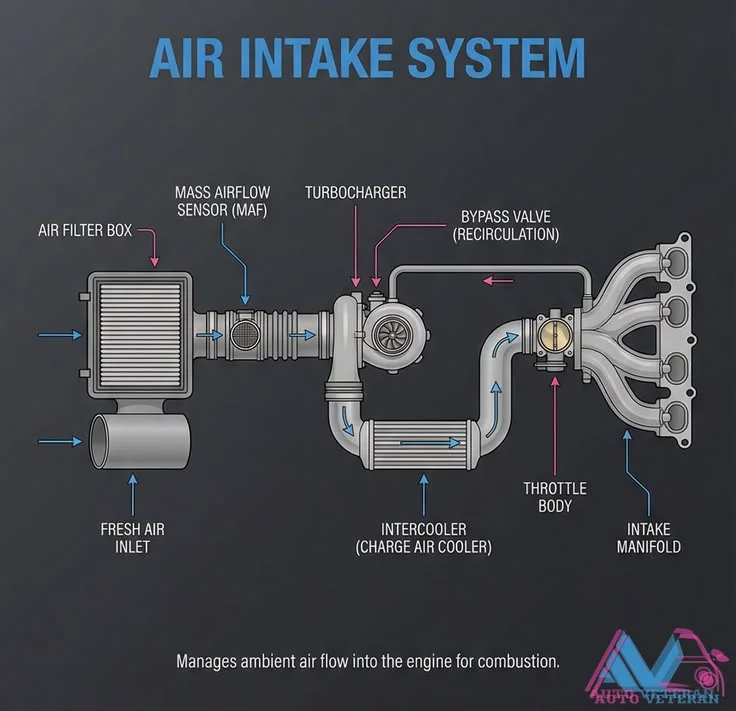
This diagram illustrates the complete air intake system for a turbocharged engine, detailing the flow path from the air filter box to the intake manifold; key components include the mass airflow sensor, turbocharger, bypass valve, intercooler, and throttle body, all working together to manage ambient air for optimal combustion and performance.
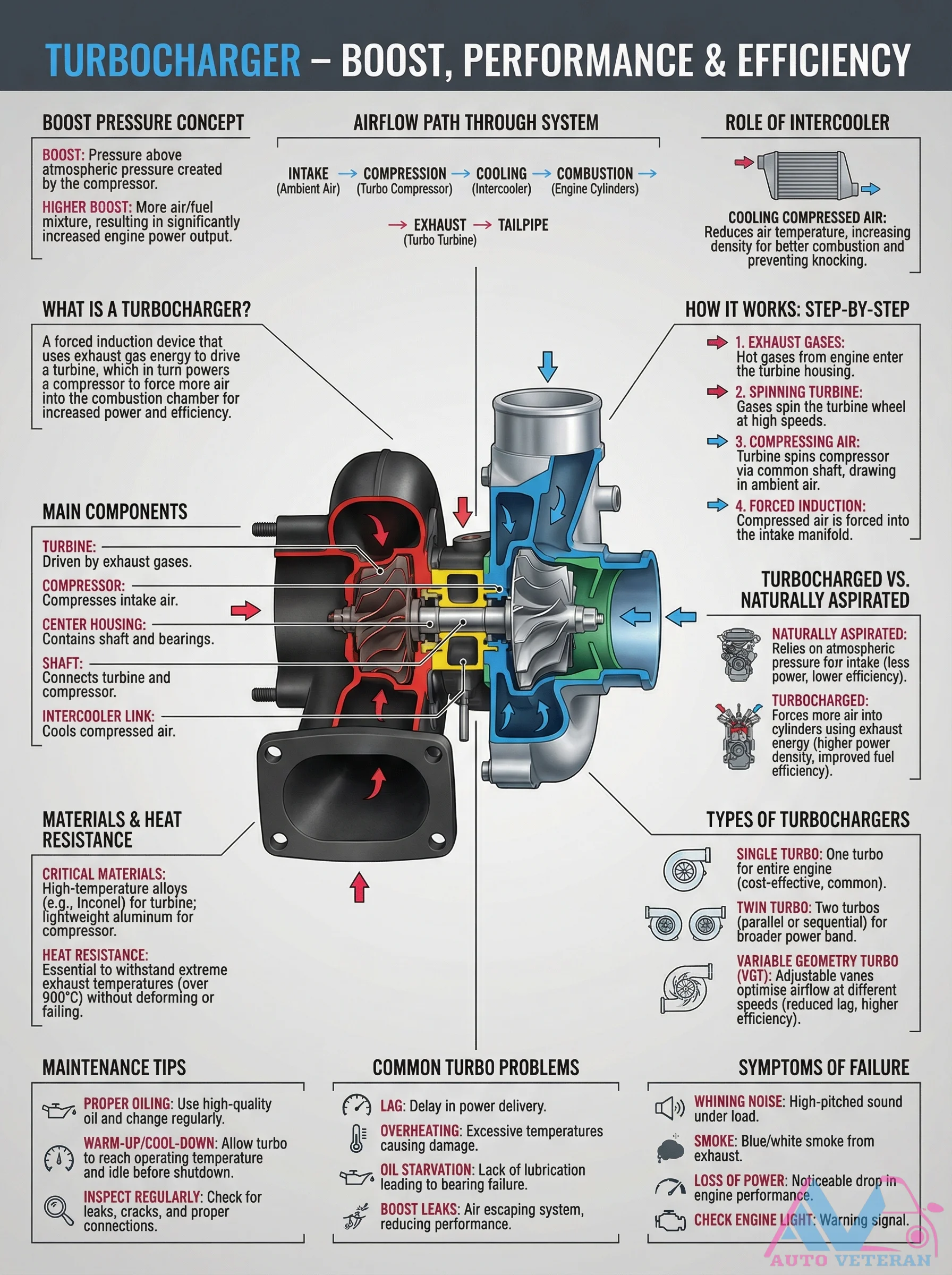
Turbochargers generate boost pressure by forcing compressed air into the engine, significantly increasing horsepower and torque output. The intercooler plays a crucial role in this system by cooling the hot compressed air from the turbo, which increases air density and oxygen content for more efficient combustion while preventing engine knock. This process involves exhaust gases spinning the turbine wheel, which drives the compressor to draw and compress ambient air. Understanding boost pressure concepts, intercooler function, and proper maintenance like using high quality synthetic oil and allowing proper warm up and cool down periods is essential for optimal turbo performance and longevity.
Turbochargers use exhaust gas energy to drive a turbine, which spins a compressor that forces compressed air into the engine cylinders. This forced induction creates boost pressure above atmospheric levels, significantly increasing power output by allowing more air and fuel mixture into the combustion chamber. An intercooler cools this compressed air, increasing its density for better combustion efficiency and preventing engine knocking. Key components include the turbine housing, compressor, center housing with shaft and bearings, and intercooler system. Proper maintenance requires high quality oil, regular warm up and cool down periods, and inspection for leaks or damage to prevent common issues like turbo lag, overheating, or power loss.
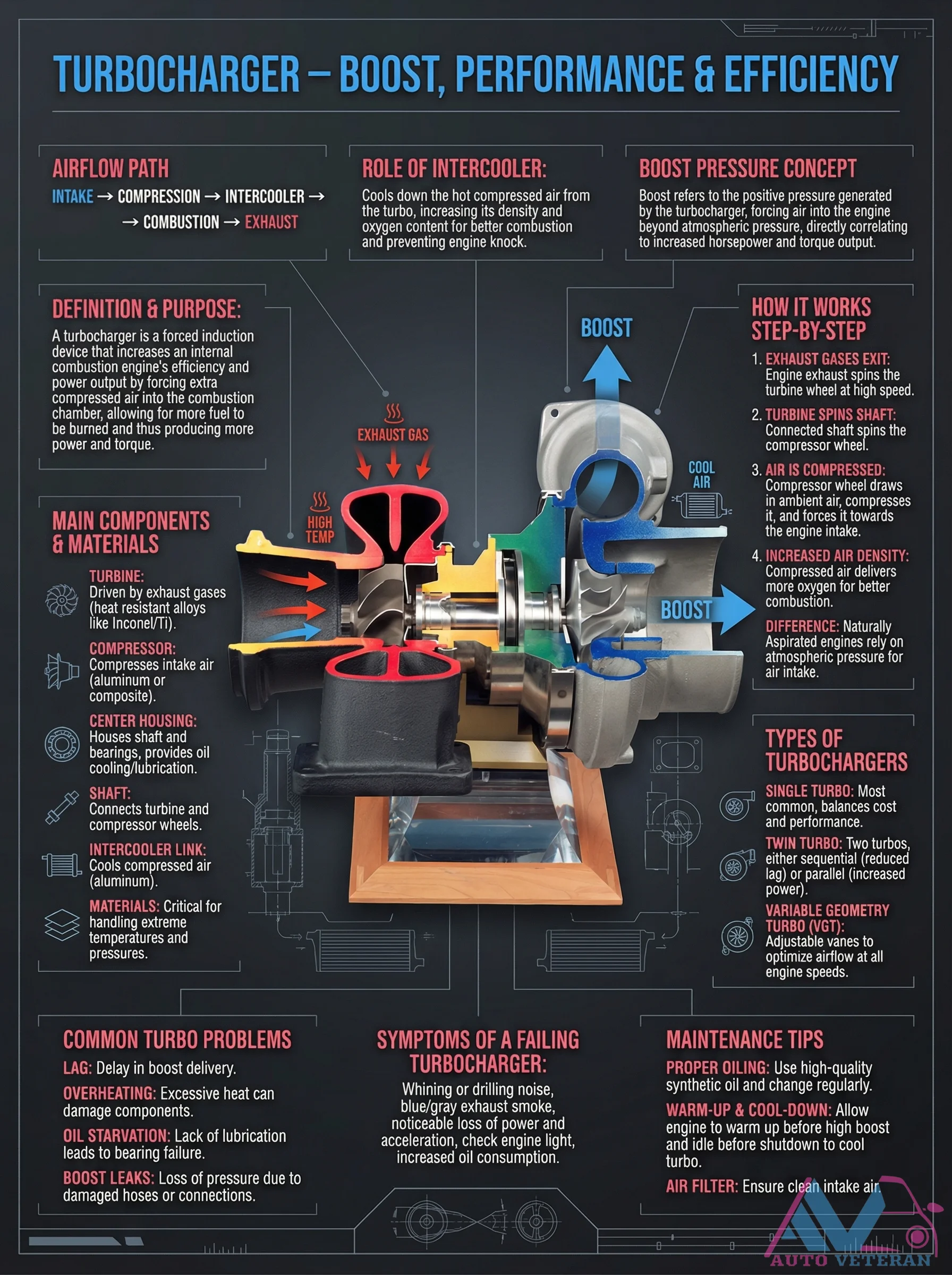
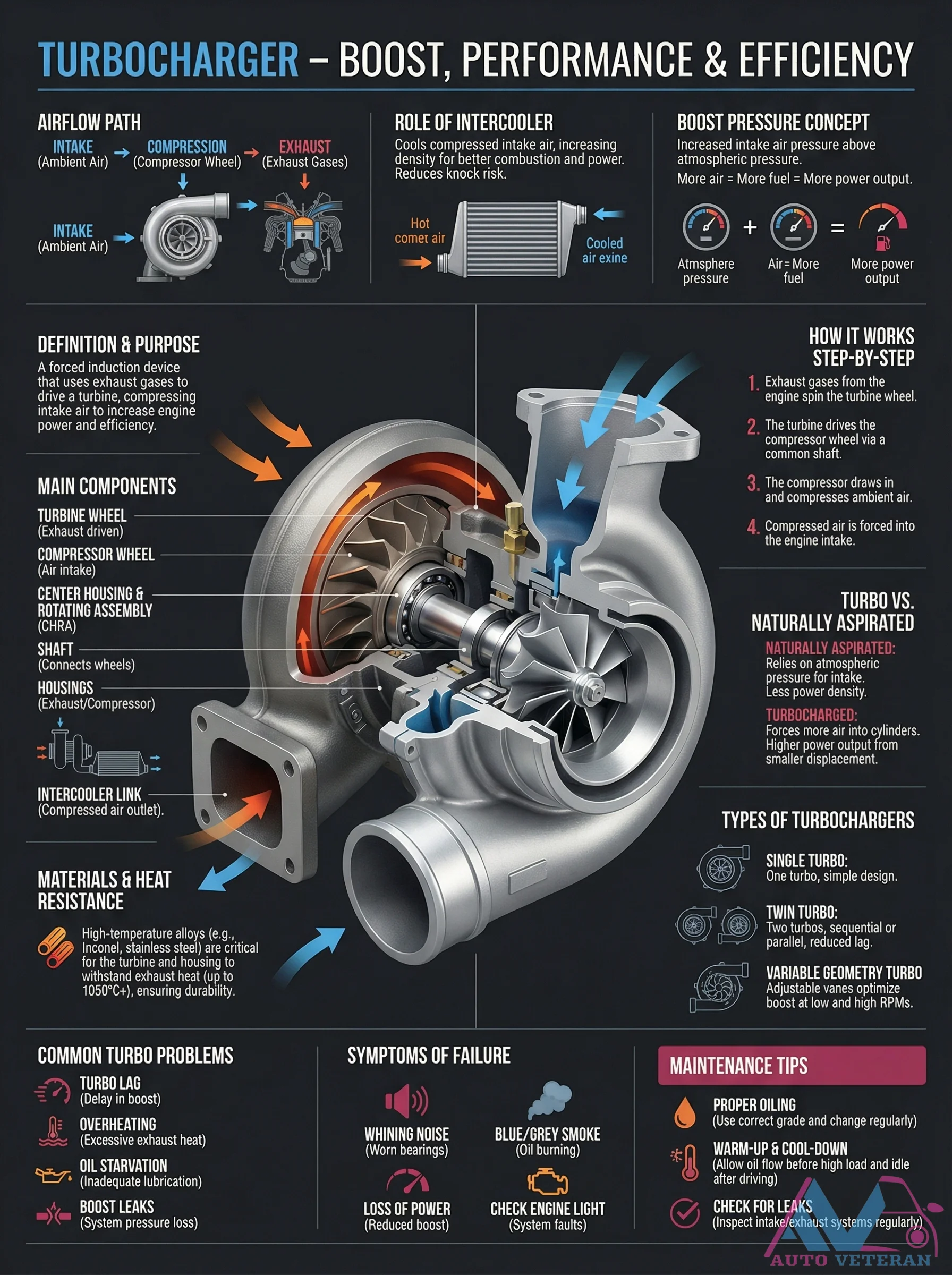
This diagram illustrates the airflow path and key concepts of a turbocharger system, including the role of the intercooler in cooling compressed intake air to increase density for better combustion and power output. It explains how boost pressure, defined as increased intake air pressure above atmospheric, reduces knock risk and enables more air and fuel for enhanced performance. The step by step process covers exhaust gases driving the turbine wheel, which spins the compressor via a common shaft to draw in and compress ambient air, forcing it into the engine. Components like the turbine wheel, compressor wheel, and center housing rotating assembly are detailed, along with comparisons to naturally aspirated engines. Types such as single, twin, and variable geometry turbos are mentioned, highlighting materials like high temperature alloys for heat resistance. Common problems include turbo lag, overheating, whining noise, blue or grey smoke from oil burning, and boost leaks, with maintenance tips on proper oiling, warm up, and cool down procedures to prevent issues like oil starvation and loss of power.
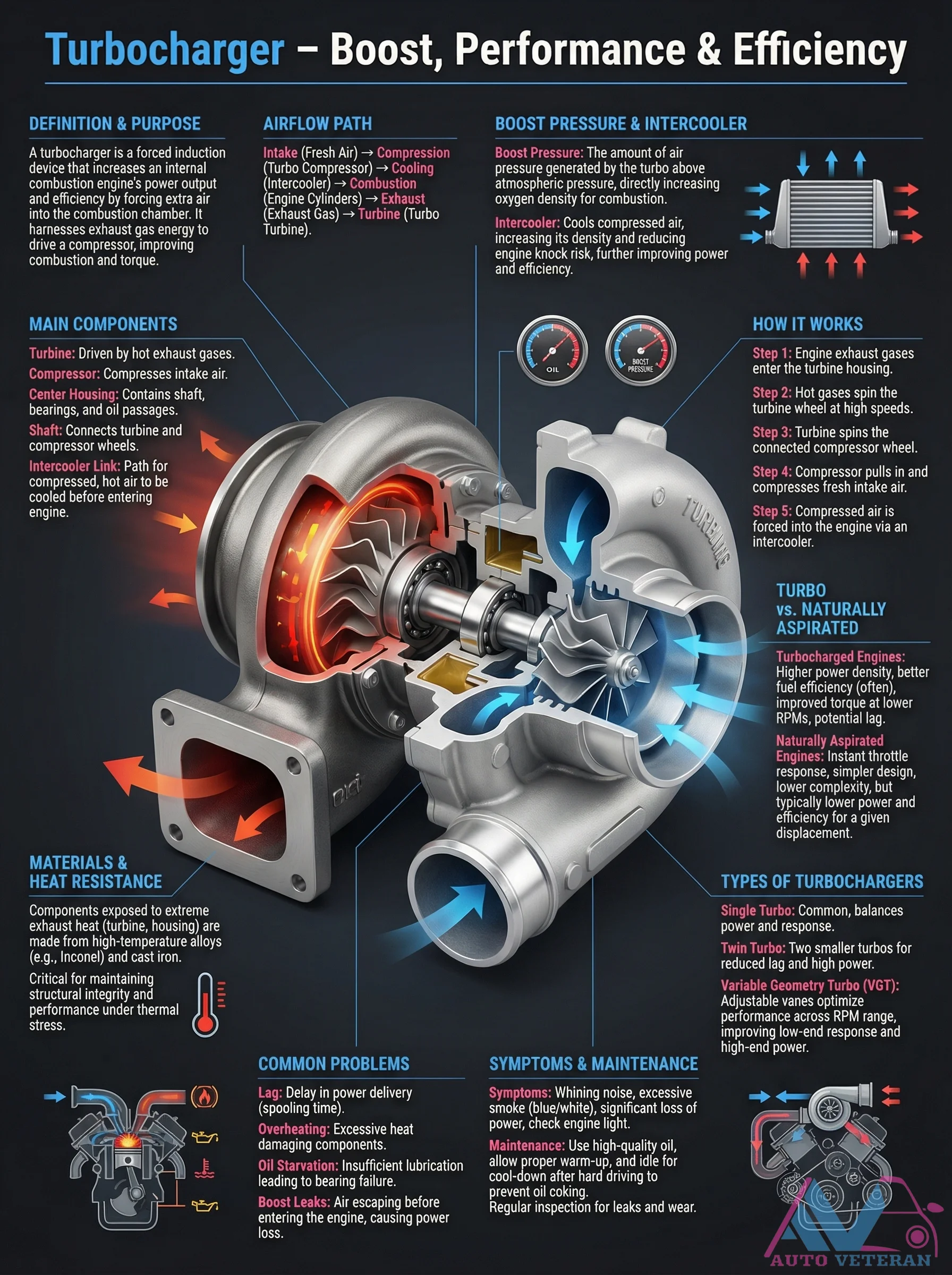
A turbocharger is a forced induction device that harnesses exhaust gas energy to drive a compressor, forcing extra air into the combustion chamber for increased power output and efficiency. The system follows a precise airflow path: intake fresh air enters the compressor, which compresses it, creating boost pressure above atmospheric pressure to increase oxygen density for combustion. Compressed hot air then flows through an intercooler to cool it, further increasing density and reducing engine knock risk before entering the engine cylinders. Key components include the turbine driven by exhaust gases, the compressor, a center housing with shaft and bearings, and an intercooler. Turbocharged engines offer higher power density, better efficiency, and improved torque at lower RPMs compared to naturally aspirated engines, though they may experience lag. Common types include single turbos, twin turbos, and variable geometry turbos with adjustable vanes for optimized performance. Materials like Inconel alloys and cast iron provide heat resistance for components exposed to extreme exhaust temperatures. Common problems include lag, overheating, oil starvation, and boost leaks, with symptoms such as whining noise, excessive smoke, power loss, and check engine lights. Maintenance involves using high quality oil, proper warm up and cool down procedures, and regular inspections.
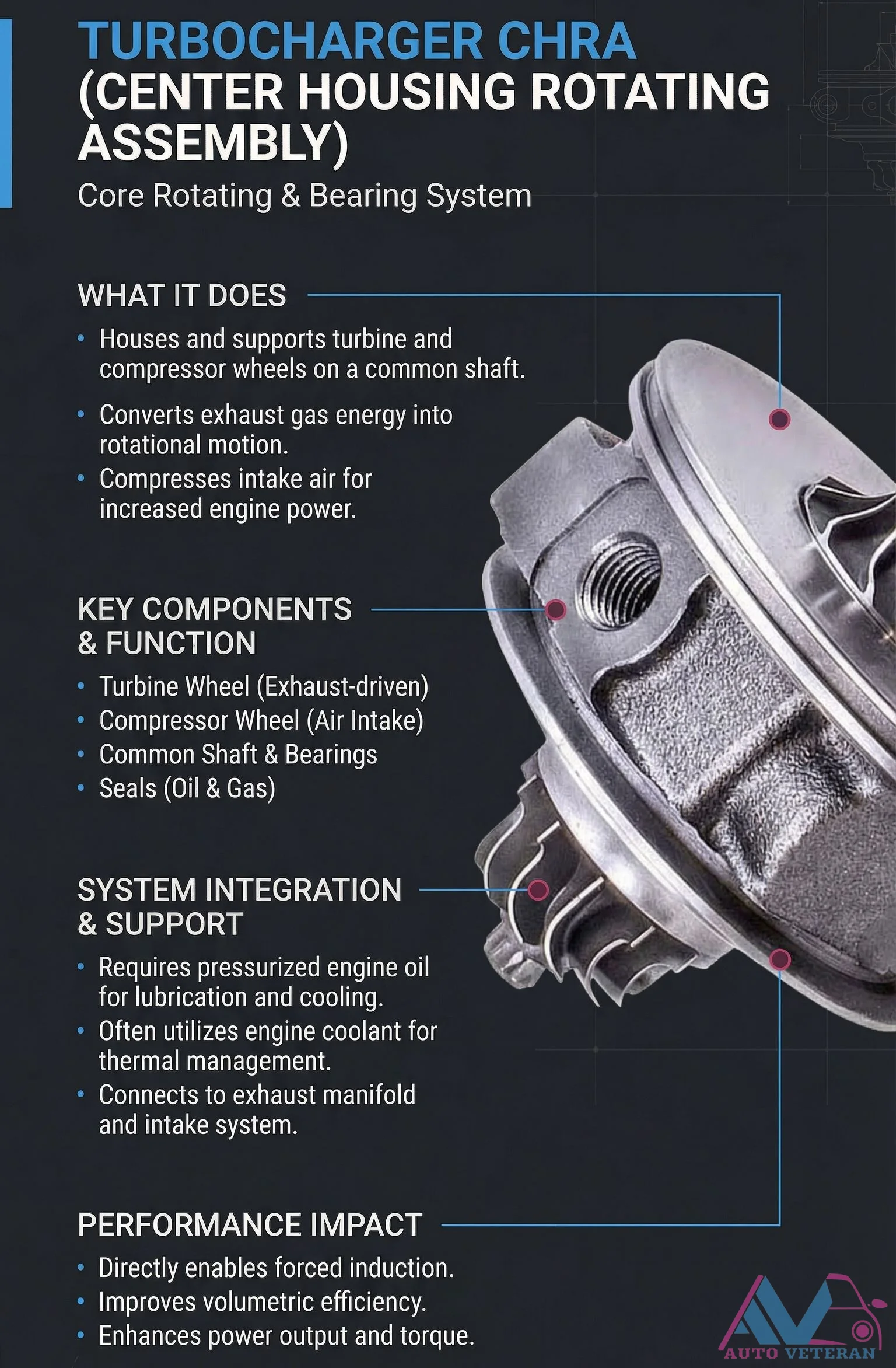
The Center Housing Rotating Assembly serves as the heart of a turbocharger, housing and supporting both turbine and compressor wheels on a common shaft. This critical assembly converts exhaust gas energy into rotational motion to compress intake air, directly enabling forced induction for increased engine power and torque. Key components include the exhaust driven turbine wheel, air intake compressor wheel, common shaft with precision bearings, and specialized oil and gas seals. The system integrates with the engine through pressurized oil for lubrication and cooling, often supplemented by engine coolant for thermal management, while connecting to both the exhaust manifold and intake system to improve volumetric efficiency.
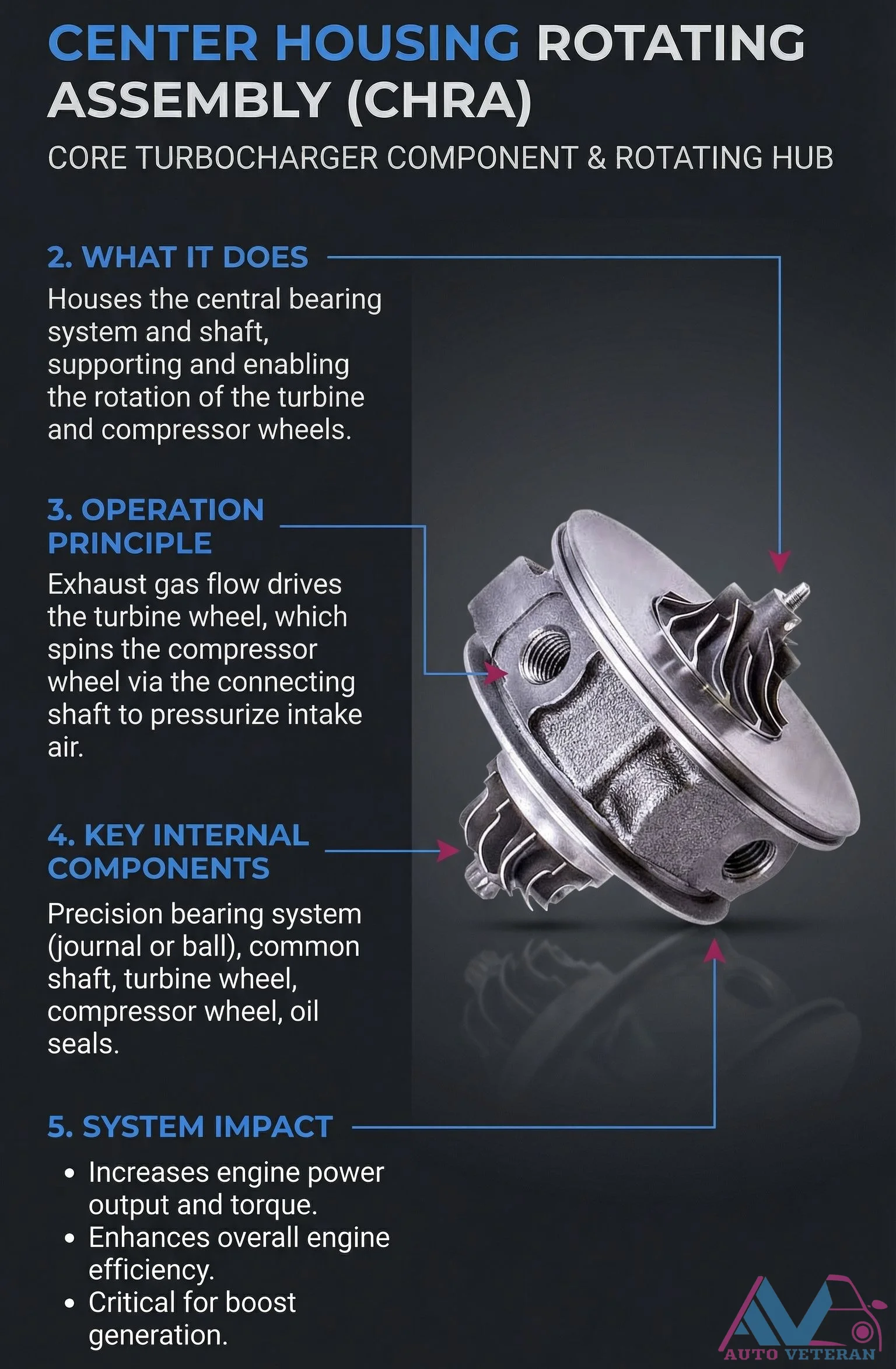
The Center Housing Rotating Assembly, or CHRA, serves as the heart of a turbocharger, housing the precision bearing system that supports the common shaft connecting the turbine and compressor wheels. This critical component enables exhaust gas flow to drive the turbine wheel, which spins the compressor wheel to pressurize intake air, thereby increasing engine power output, torque, and overall efficiency. Key internal parts include journal or ball bearings, oil seals, and the rotating hub that ensures smooth operation for reliable boost generation.
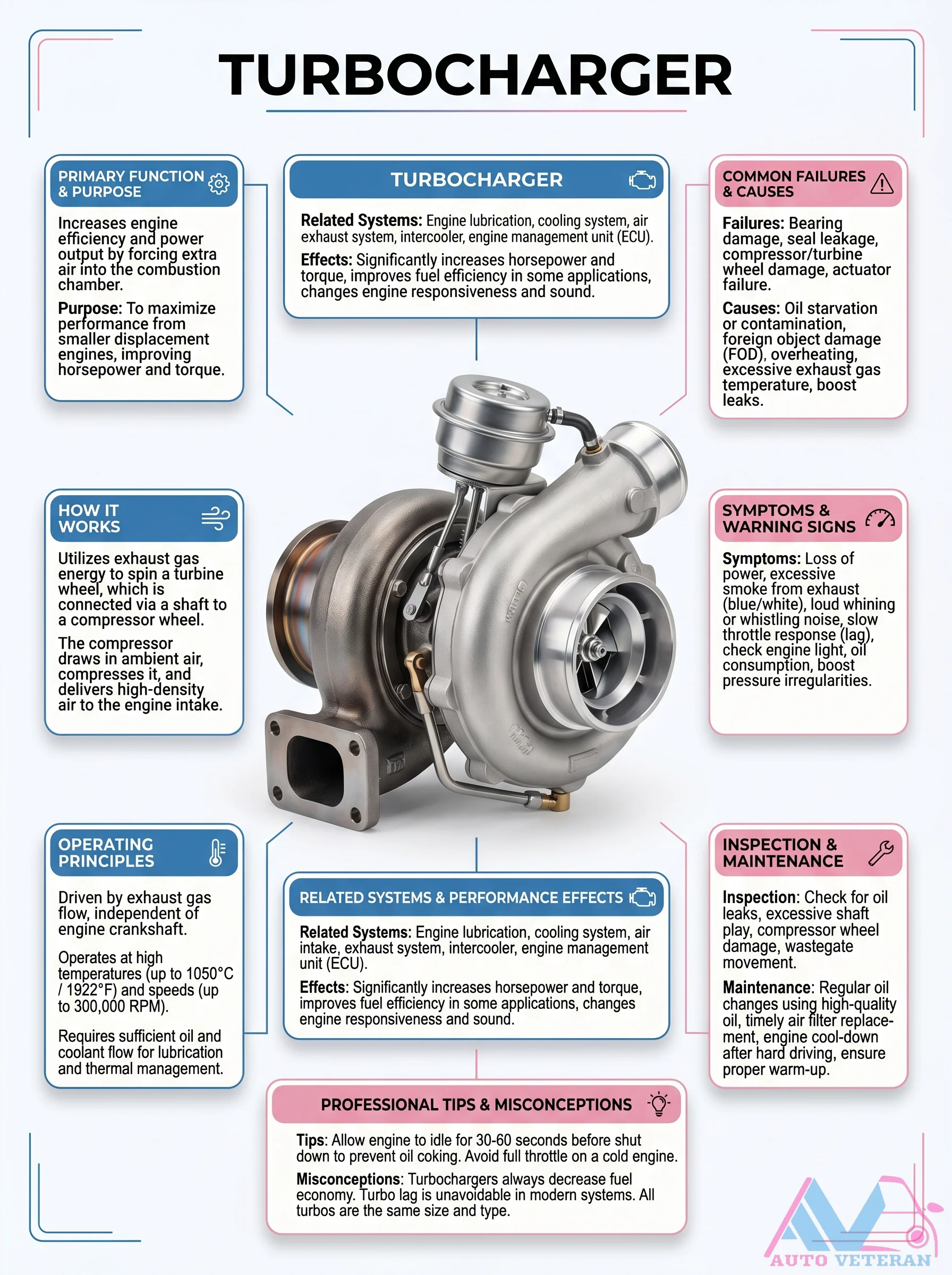
This guide covers the primary function of a turbocharger, which uses exhaust gas to drive a turbine connected to a compressor wheel, forcing more air into the engine to significantly increase horsepower and torque. It details common failures such as bearing damage, seal leakage, and compressor or turbine wheel damage, often caused by oil starvation, contamination, foreign object damage, overheating, or excessive exhaust gas temperature. Key symptoms include loss of power, excessive smoke from exhaust (blue or white), loud whining or whistling noises, slow throttle response, check engine light, oil consumption, and boost pressure irregularities. The guide also emphasizes inspection for oil leaks, excessive shaft play, and compressor wheel damage, along with maintenance tips like regular oil and air filter changes, engine cool down after hard driving, and proper warm up. Professional advice includes allowing the engine to idle before shutdown to prevent oil coking and avoiding full throttle on a cold engine, while debunking misconceptions that turbos always decrease fuel economy or that turbo lag is unavoidable in modern systems.
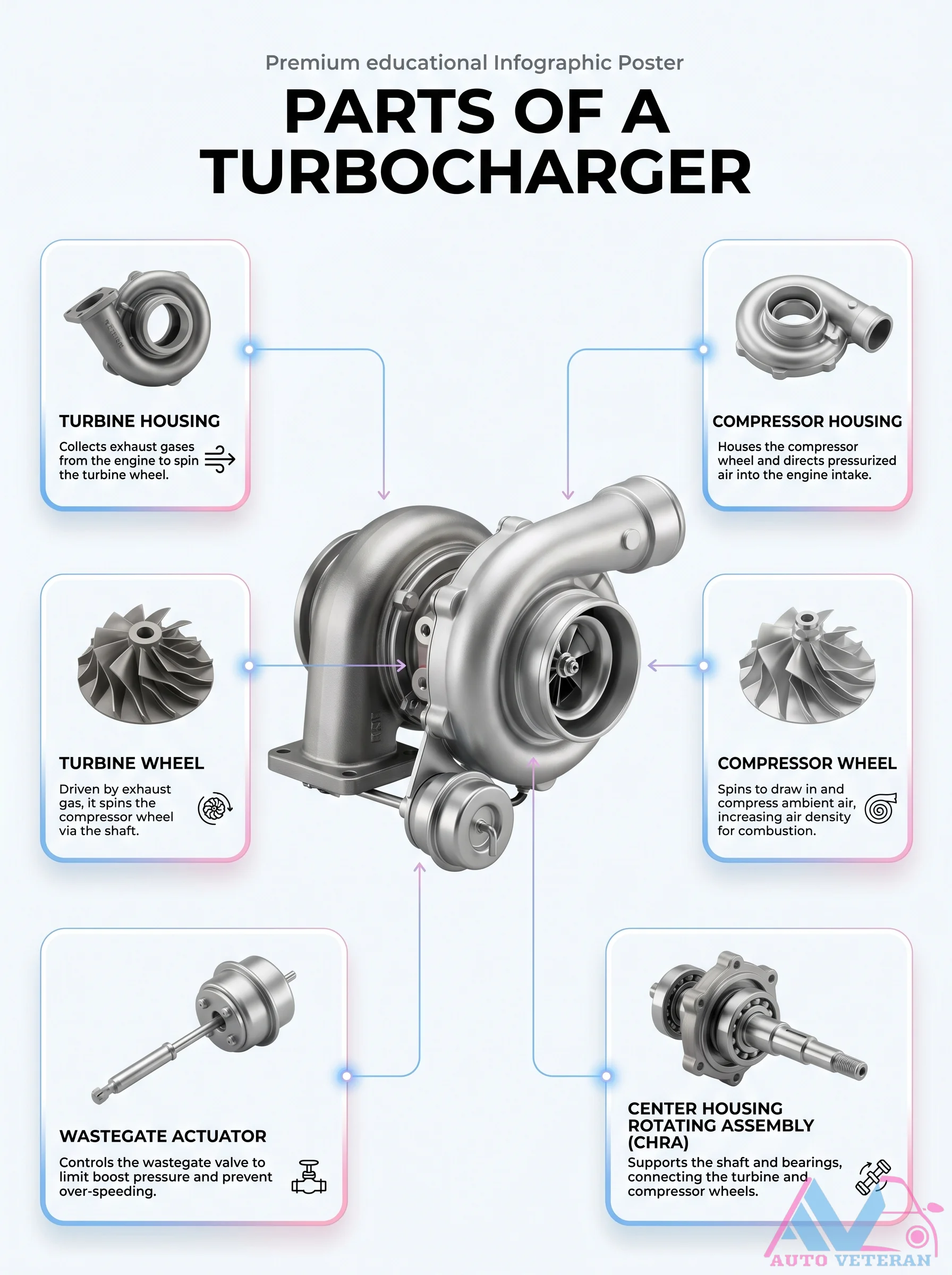
Explore the key elements of a turbocharger including the turbine housing that collects exhaust gases to spin the turbine wheel, the compressor housing that directs pressurized air into the engine intake, and the center housing rotating assembly (CHRA) supporting the shaft and bearings. The wastegate actuator controls boost pressure to prevent over speeding. This premium educational infographic details each part's function for a clear understanding of turbocharger operation.
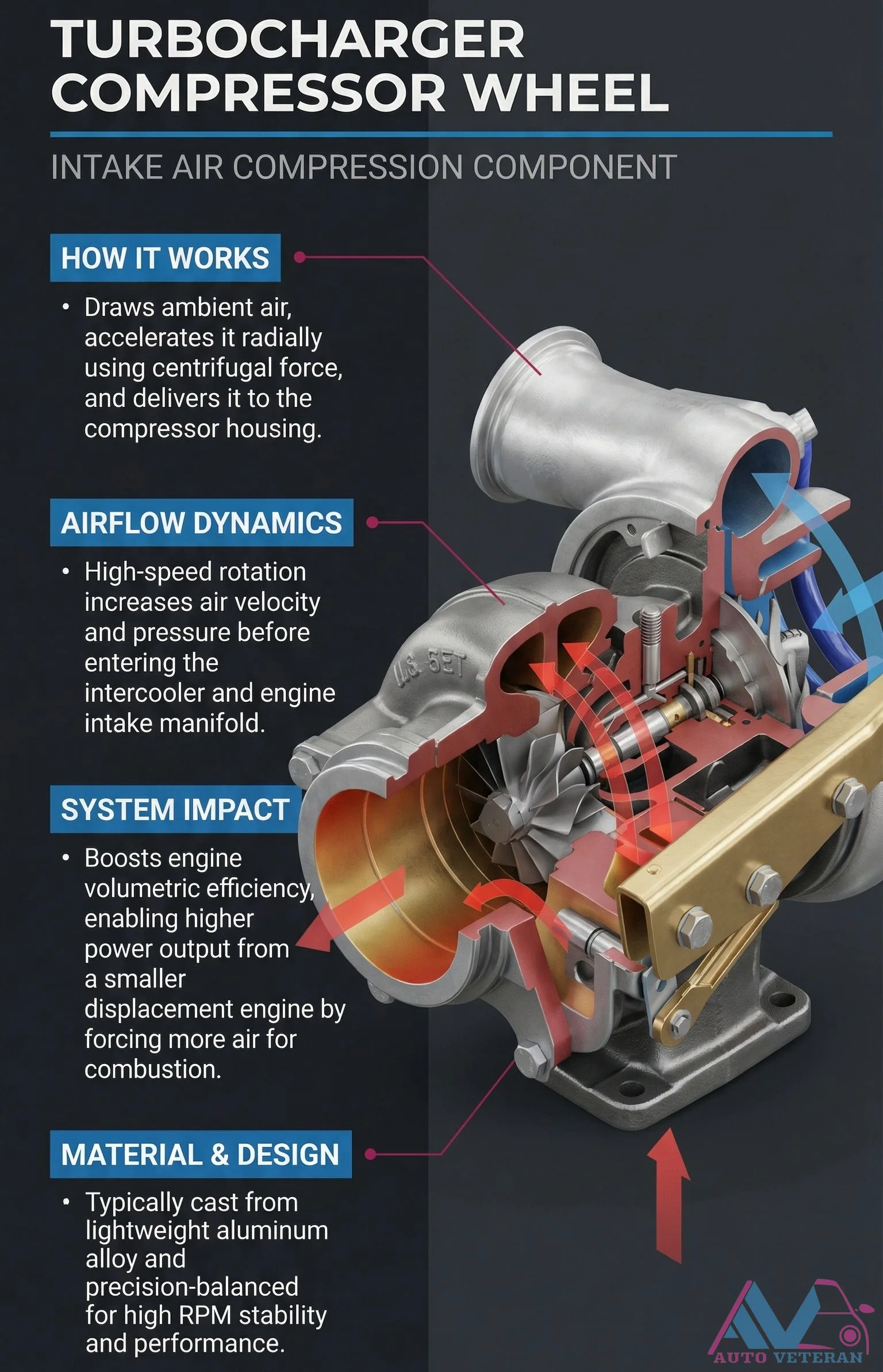
The turbocharger compressor wheel functions as the critical intake air compression component, drawing ambient air and accelerating it radially through centrifugal force before delivering it to the compressor housing. This high-speed rotation dramatically increases air velocity and pressure, preparing the compressed air for the intercooler and engine intake manifold. By boosting volumetric efficiency, this component enables smaller displacement engines to achieve higher power output through forced air combustion. Typically cast from lightweight aluminum alloys, these wheels are precision balanced for exceptional high RPM stability and performance, making them a cornerstone of modern forced induction systems.
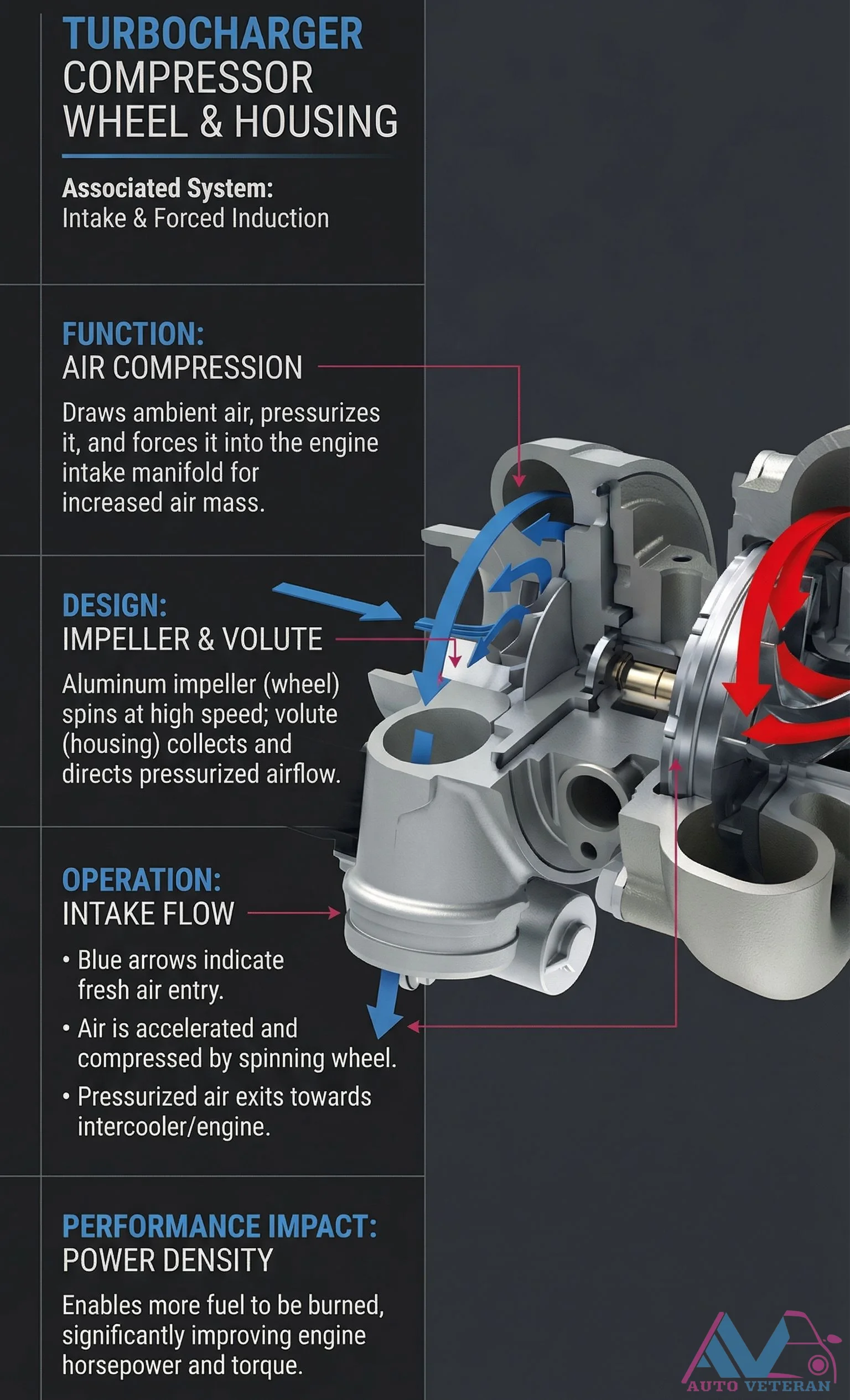
The turbocharger's compressor wheel and housing work together to dramatically increase engine power density. An aluminum impeller spins at extremely high speeds to draw in ambient air, while the volute shaped housing collects and directs the pressurized airflow into the engine's intake manifold. This forced induction process enables significantly more fuel to be burned, resulting in substantial horsepower and torque gains.
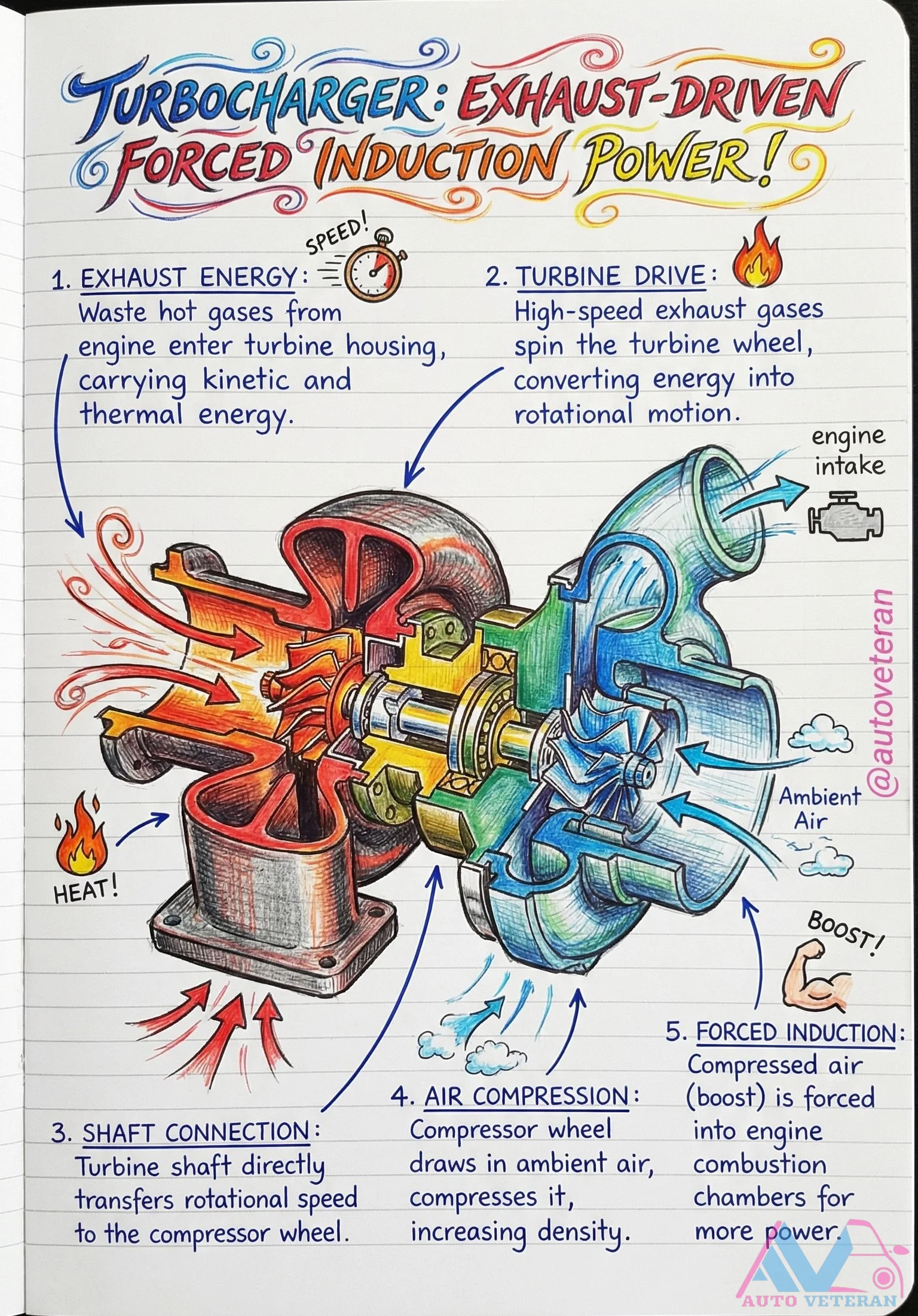
An exhaust-driven turbocharger harnesses waste hot gases from the engine to power its turbine wheel, converting thermal and kinetic energy into rotational motion; this spins the compressor wheel via a shaft connection, drawing in ambient air and compressing it into dense boost that is forced into the combustion chambers for increased power output.
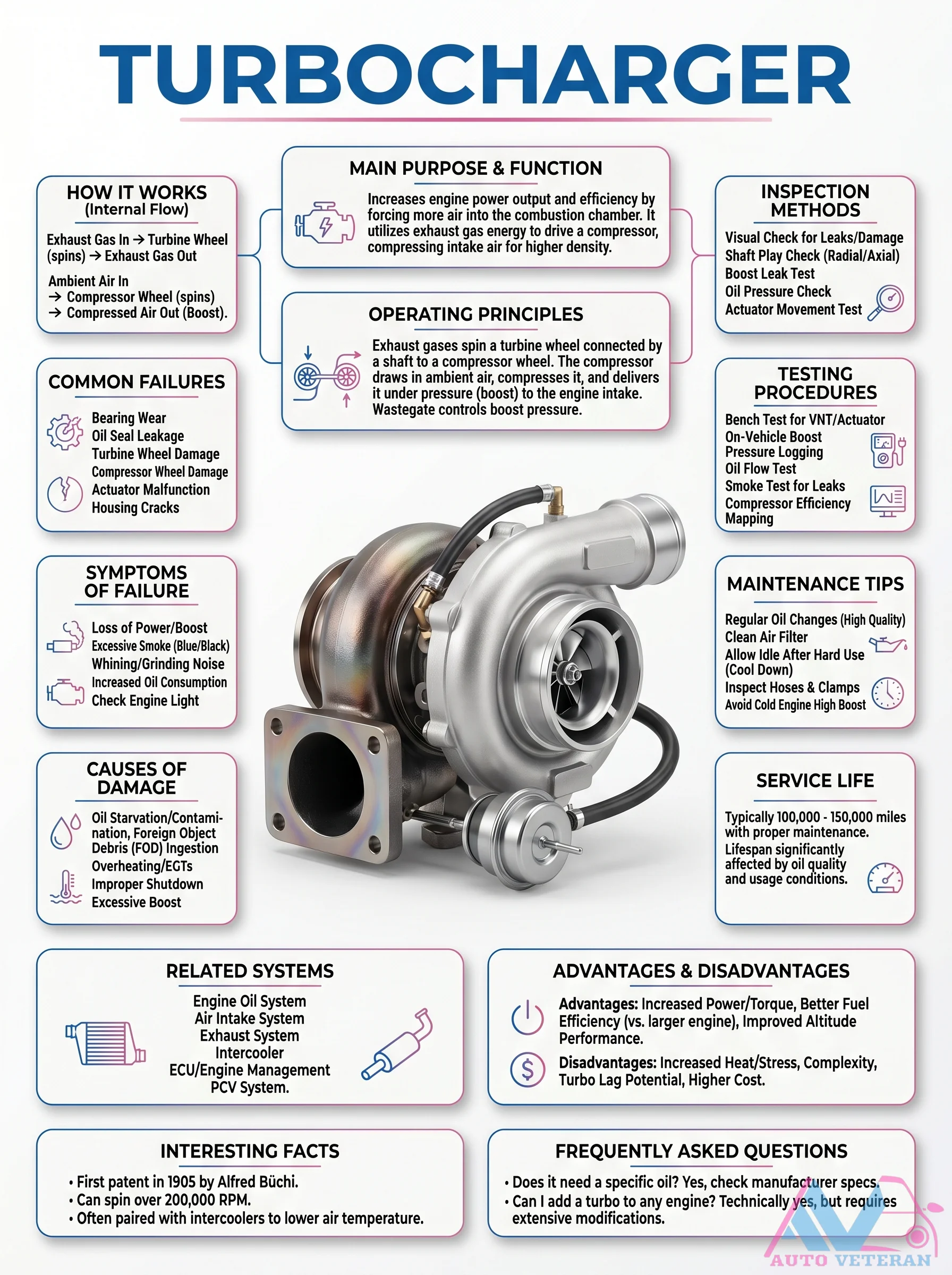
This comprehensive guide breaks down the turbocharger's primary purpose and function: increasing engine power output by forcing more air into the combustion chamber. The operating principle is clearly explained with exhaust gases spinning a turbine wheel connected by a shaft to the compressor, which draws ambient air, compresses it, and delivers it under boost pressure to the engine. The guide details inspection procedures such as visual checks for leaks and damage, shaft play checks for radial and axial movement, boost leak tests, oil pressure checks, and actuator movement tests. Common failures include bearing wear, oil seal leakage, turbine and compressor wheel damage, actuator malfunction, and housing cracks. Symptoms of failure encompass loss of power, excessive smoke (blue or black), whining or grinding noises, increased oil consumption, and a check engine light. Causes of damage stem from oil starvation or contamination, foreign object debris ingestion, overheating or excessive exhaust gas temperatures, improper shutdown, and excessive boost. Maintenance tips emphasize regular oil changes with high quality oil, a clean air filter, idle time after hard use for cool down, and inspecting hoses and clamps. Service life typically ranges from 100,000 to 150,000 miles with proper maintenance, heavily influenced by oil quality and usage conditions. Related systems include the engine oil system, air intake system, exhaust system, intercooler, ECU engine management, and PCV system. Advantages are increased power and torque, better fuel efficiency compared to larger engines, and improved altitude performance. Disadvantages include increased heat and stress, complexity, potential turbo lag, and higher cost. Interesting facts note the first patent in 1905 by Alfred Buchi, turbochargers can spin over 200,000 RPM, and they often pair with intercoolers to lower air temperature.
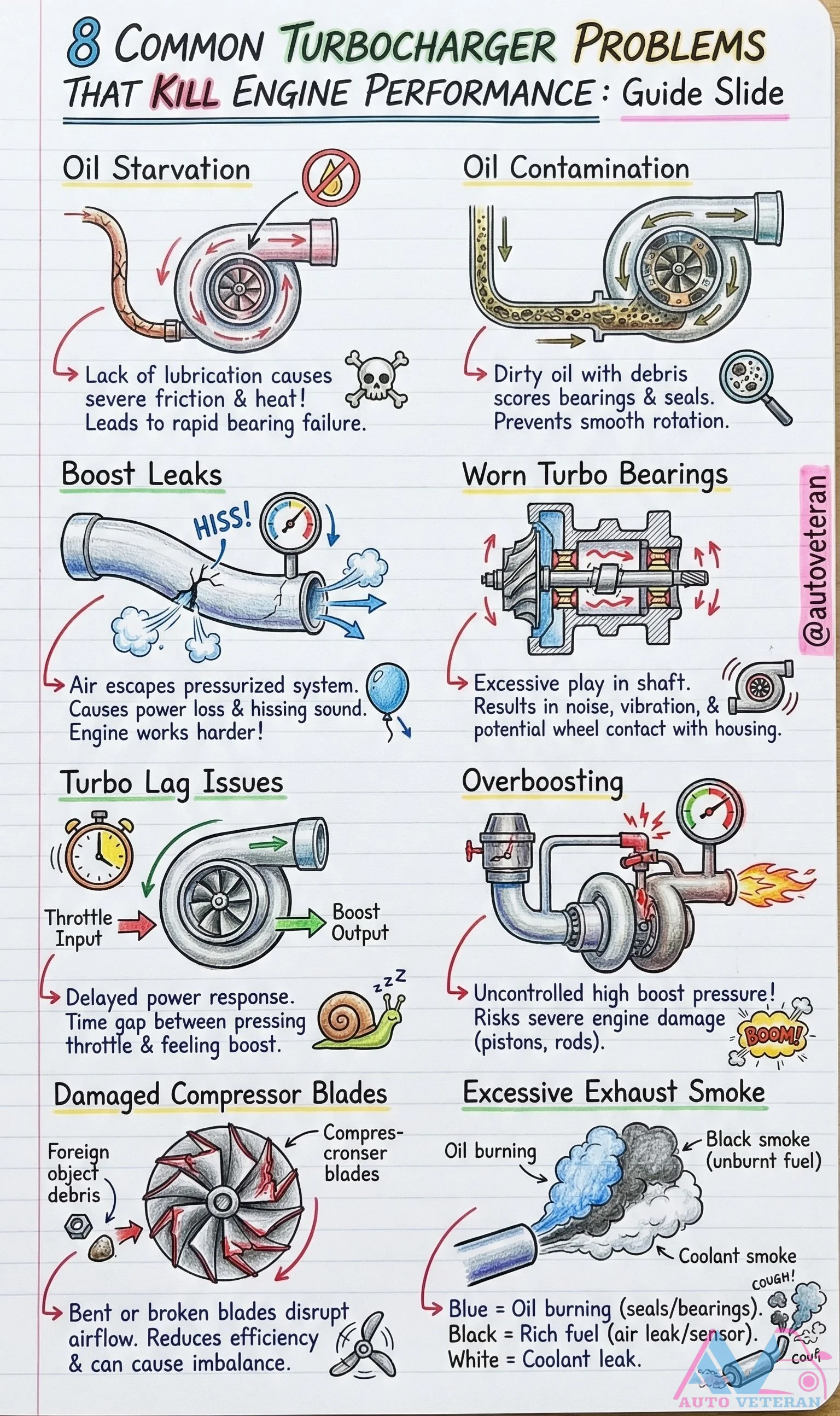
Oil starvation and contamination are critical turbocharger problems that rapidly degrade engine performance. When lubrication is insufficient, severe friction and heat develop, causing rapid bearing failure. Contaminated oil with debris scores bearings and seals, preventing smooth rotation and leading to catastrophic turbo damage. These issues manifest as excessive exhaust smoke, noise, vibration, and potential wheel contact within the housing, ultimately resulting in complete turbo failure and severe engine risk if unaddressed.