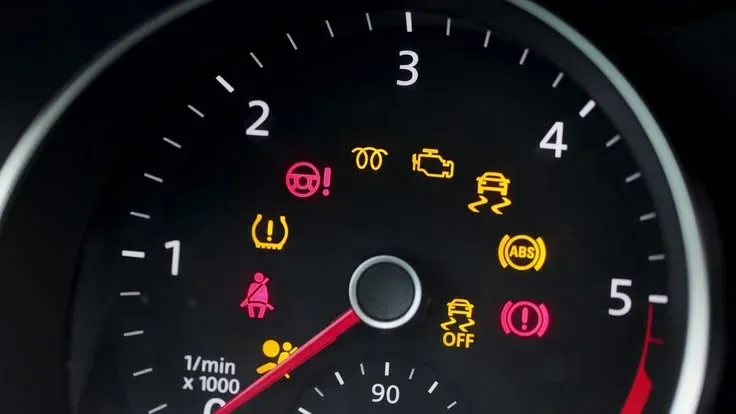
In 2023, J.D. Power's Vehicle Dependability Study found that infotainment and dashboard-related complaints were the single largest category of problems reported by owners of three-year-old vehicles. That tells you something important. The lights on your dashboard have become a communication channel, and often they are saying things the car is not actually broken enough to justify. I have lost count of the number of drivers who walk into my workshop with the same puzzled expression and the same opening line. "The lights flash, but the car drives perfectly fine." They are not wrong, and they are not imagining it. What they are experiencing is one of the most misunderstood behaviors in modern automotive electronics.
Here is what I tell every one of them. A flashing warning light is the car's computer telling you it has detected something it cannot ignore, but that does not automatically mean a catastrophic failure is underway. The system is doing its job, which is to get your attention before a minor issue becomes an expensive one. The trouble is that drivers either panic and assume the worst, or they dismiss the flashing entirely because the car "feels normal." Both reactions miss the point. Let me walk you through what is actually happening, why the car keeps running, and what you should do about it. If you have already scanned the car and found nothing obvious, this guide on the hidden pattern behind intermittent dashboard warnings is worth reading before you go further.
Why a Flashing Light Does Not Always Mean a Dead Car
Modern vehicles run on a network of sensors and control modules that monitor thousands of data points every second. When a reading drifts outside a programmed threshold, the computer flags it. A flashing light is usually a higher-priority alert than a steady one, but priority does not equal imminent failure. The engine management system is designed to keep the car running safely even when a component is misbehaving, and it will often enter what engineers call a "limp" or reduced-power strategy rather than shut down completely. That is why your car still moves, still accelerates, and still gets you to work. The light is a warning, not an obituary.
The Difference Between Steady and Flashing
A steady check engine light typically indicates a fault that has been logged but is not currently causing active damage. A flashing light, on the other hand, is usually reserved for conditions the manufacturer considers urgent, most commonly a misfire severe enough to damage the catalytic converter. That distinction matters because it changes how quickly you should act. I have seen drivers ignore a flashing light for weeks because the car "felt fine," and I have seen others pull over in a panic over a light that simply indicated a loose fuel cap. The truth sits in the middle, and the only way to know which side you are on is to read the codes.
The Role of the ECU in Keeping You Moving
Your engine control unit is remarkably good at compensating for problems. If a sensor sends bad data, the ECU often substitutes a default value so the engine keeps running. If one cylinder misfires occasionally, the computer adjusts fuel and timing to protect the catalytic converter. This protective behavior is exactly why the car feels normal while the light flashes. The system is quietly doing damage control in the background, and that is a good thing for your immediate safety but a bad thing for your long-term repair bill. Understanding the secret ECU behavior that protects your engine without warning you will change how you interpret every light on your dash.
The Most Common Culprits Behind a Flashing Light
In my experience, a handful of faults account for the majority of flashing-light complaints where the car still drives normally. Let me go through the ones I see most often, because knowing them helps you ask better questions when you finally get the car scanned.
An Intermittent Misfire
This is the number one suspect, and it is the one I take most seriously. A misfire means one or more cylinders are not firing properly, and unburned fuel is being pushed into the exhaust where it can overheat and destroy the catalytic converter. The car often feels only slightly rough at idle or under light load, which is why drivers convince themselves nothing is wrong. A worn spark plug, a failing ignition coil, or a dirty fuel injector can all cause this. If you want to understand the early symptoms, this breakdown of the spark plug symptoms that explain hesitation when accelerating is a good place to start.
A Failing Oxygen Sensor or Emissions Fault
Oxygen sensors monitor exhaust gases and feed data back to the ECU so it can fine-tune the fuel mixture. When one begins to fail, it can send erratic signals that trigger a flashing light without noticeably affecting drivability. The car compensates, you keep driving, and the sensor quietly degrades further. This is one of those cases where the light is doing you a favor by alerting you early. Left alone, a bad sensor can lead to poor fuel economy and, eventually, catalytic converter damage.
A Sensor Losing Communication Intermittently
Sometimes the fault is not in a mechanical component at all but in the wiring or the sensor's connection. A loose ground, a chafed wire, or a failing connector can cause a sensor to drop offline for a fraction of a second, triggering a flash before the signal returns to normal. These are the most frustrating faults to diagnose because they often refuse to appear when the car is in the workshop. If your car only misbehaves on damp mornings or over rough roads, this is a strong possibility. A dirty ground connection is a surprisingly common cause, and why dirty grounds cause more car problems than people realize explains the mechanism clearly.
What You Should Actually Do When the Light Flashes
First, do not panic, and second, do not ignore it. If the light is flashing continuously and the car is running rough, pull over safely and stop the engine. That is the conservative, correct move. If the light flashes briefly and then stops, or if it comes and goes while the car drives smoothly, you have a little more room, but you should still get the codes read within a day or two. A cheap OBD-II scanner costs less than a tank of fuel and will tell you exactly which system is complaining. Do not rely on guesswork, and do not let a parts store sell you a sensor before you have read the fault.

ANCEL AD410 Enhanced OBD2 Scanner, Vehicle Code Reader for C
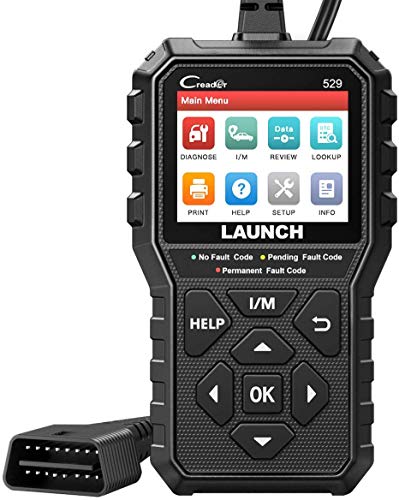
LAUNCH CR529 OBD2 Scanner Diagnostic Tool, Full OBD2 Scanner

Engine Oil Pressure Sensor Switch, Oil Sending Unit, Engine

ACDelco Gold 213-4514 (19236568) Engine Coolant Temperature
Once you have the code, look it up. A misfire code points you toward ignition and fuel delivery. An emissions code points you toward sensors and the exhaust system. A communication code points you toward wiring and grounds. Each path leads somewhere different, and knowing the code saves you from throwing money at the wrong part. I always tell customers the same thing. "The scanner is not the repair, but it is the map." Use it before you spend a cent.
Read Also: Warning Light On Dashboard That Could Indicate Imminent Engine Seizure
One more piece of advice that has saved my customers thousands over the years. If the car is still under warranty, do not clear the codes before the dealer sees them. Clearing the codes erases the freeze-frame data the manufacturer uses to confirm the fault, and that can complicate a warranty claim. Let the professionals read it first, then decide your next step. The National Highway Traffic Safety Administration maintains resources on diagnostic trouble codes and vehicle safety that are worth bookmarking for reference.
"It has been flashing for a week, but it drives like a dream." That sentence is the one I hear right before a misfire turns into a four-figure bill.
When the Light Is Telling You Something Serious
Not every flashing light is harmless, and I would be doing you a disservice if I pretended otherwise. If the light flashes in rhythm with a noticeable shudder, if the car loses power, or if you smell raw fuel or see smoke, stop driving and get it checked immediately. A severe misfire can dump enough unburned fuel into the exhaust to melt a catalytic converter in a matter of minutes, and that is a repair nobody wants to pay for. The same applies if a flashing engine light is accompanied by a temperature warning or an oil pressure warning. Those combinations are genuine emergencies, and the car should be parked until they are resolved.
The line between "watch and wait" and "stop right now" is usually obvious once you know what to feel for. The engine stumbling, a strong vibration through the steering wheel, or a sudden loss of power all mean the fault is active and worsening. A single brief flash on a smooth-running engine is a different situation entirely. Trust your senses alongside the light, and never let a dashboard warning override what the car is physically telling you.
The Final Word
A flashing warning light on a car that still runs fine is not a contradiction. It is a conversation, and the car is asking you to pay attention before a small problem grows teeth. Read the codes, understand the fault, and fix the cause rather than clearing the light and hoping it stays away. That approach has kept my customers on the road and out of the repair bay for years, and it will do the same for you. If you want to understand the broader consequences of ignoring these warnings, this piece on what happens if you ignore a check engine light for too long is a sobering read.
Because "the car runs fine" is not a diagnosis. It is a delay. And in my workshop, delays are the most expensive parts of all.

Comments (0)
Please login to join the discussion
Be the first to comment on this article!
Share your thoughts and start the discussion