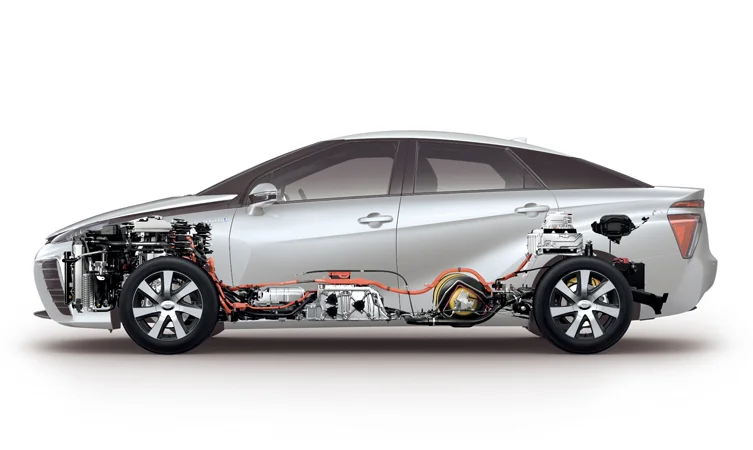
In 2023, Toyota sold over 11.2 million vehicles worldwide, according to Toyota Motor Corporation's own sales data, and that number keeps climbing every single year. Yet here is what really matters to those of us who turn wrenches for a living. When you look at the major reliability surveys, Toyota consistently lands near the top for one specific reason that has almost nothing to do with luck. The brand builds cars that catch their own faults early, sometimes years before the driver ever notices anything wrong. I have spent enough time under the hood of these machines to know that this is not marketing spin. It is engineering discipline, and it shows up in how the car behaves, how it warns you, and how it fails when it finally does.
Most manufacturers design a component to last through the warranty period and then hope for the best. Toyota takes a different path. They design systems with feedback loops, self learning calibrations, and layered sensors that watch the same function from multiple angles. That philosophy is why a Toyota with a developing engine misfire often tells you about it long before the problem becomes expensive. It is also why so many Toyota owners get a warning light that feels premature, only to discover later that the car was protecting them from a much bigger bill.
I want to walk you through how this actually works, using real examples from the workshop and from Toyota's own engineering documentation. This is not a brand loyalty piece. It is a look at the design thinking behind a machine that seems to anticipate trouble, and what you can learn from it for your own car, whatever badge is on the grille.
The Self Correcting Philosophy Behind Toyota Engineering
Toyota's internal development process is built around a concept the company calls genchi genbutsu, which translates roughly to going and seeing for yourself. Engineers do not diagnose from reports. They go to the factory floor, the test track, and the customer's driveway. That habit shapes how they design the electronics that run modern Toyotas, because they are constantly asking one question. What could go wrong here, and how do we let the car notice it first?
This is where the difference becomes visible. A typical mass market vehicle uses a sensor to report a value. If the value crosses a threshold, a light comes on. Toyota goes further by cross referencing that value against other sensors that measure the same physical reality from a different angle. The mass airflow sensor reports how much air is entering the engine. The oxygen sensor reports how much oxygen remains in the exhaust. The fuel trim numbers report how much correction the computer is applying. If those three stories do not agree, the car knows something is drifting, and it can adjust or flag it before the driver feels a stumble.
Why Drivers Rarely See the Same Failure Twice
There is a pattern I have noticed over years of service work that I wrote about in a piece on why Toyota cars rarely fail the same way twice. When a Toyota comes in with a fault, the repair often involves an updated part number or a revised calibration. The company treats every warranty failure as a data point and feeds it back into production. A driver who experiences a water pump weep at 90,000 miles might find that the replacement part has a revised seal design that the original did not. The car learns from its own fleet.

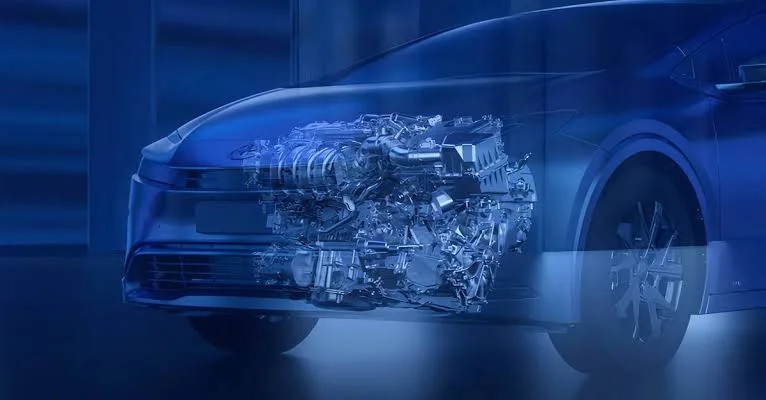
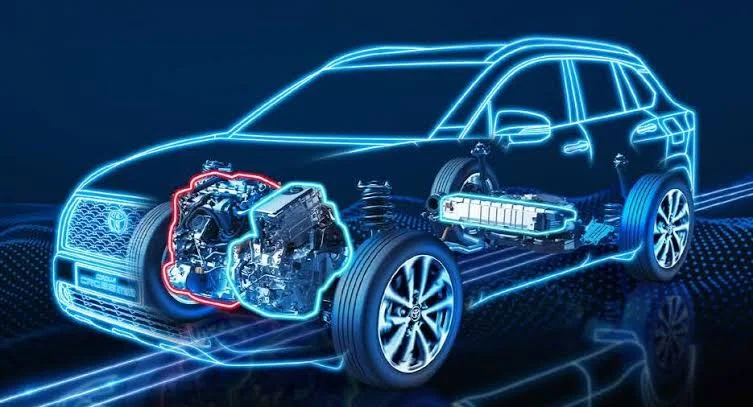
This matters because it changes the ownership experience. You are not buying a static machine. You are buying into a system that has already corrected thousands of small weaknesses before your specific car was built. That is why a 2015 Camry and a 2020 Camry with the same engine can feel meaningfully different in how they age.
The Role of Conservative Tolerances
Toyota engineers are famous within the industry for specifying tighter tolerances than the competition, then testing to the edge of those tolerances for hundreds of thousands of miles. A transmission clutch pack that a rival might rate for a certain torque load gets tested at a higher load in Toyota's durability cycles. The result is a component that operates well below its stress limit during normal driving. It does not fix problems before they happen in a mystical sense. It simply removes the conditions that create most problems in the first place.
This is also why Toyota vehicles tend to be slightly heavier and slightly less aggressive in their tuning than some rivals. The extra material and the softer calibration are not accidents. They are the price of long term stability, and Toyota has decided that price is worth paying.
How Sensor Networks Catch Faults Early
The modern Toyota powertrain control module monitors dozens of parameters simultaneously, and it uses a technique called rationality checking to validate each one. Instead of asking whether a sensor reading is within range, it asks whether that reading makes sense given everything else the car knows. This is the same principle behind the engine sensors that detect problems before they worsen, and Toyota has been refining it for decades.
Fuel Trim as an Early Warning System
Fuel trim is one of the clearest examples. The engine computer continuously adjusts how much fuel it injects based on what the oxygen sensors report. Under normal conditions, those adjustments stay within a narrow band. When a vacuum leak develops, or an injector starts to clog, the computer has to add more fuel to compensate. That correction shows up in the live data long before the driver feels a rough idle or sees a check engine light.
A technician who knows what to look for can spot a failing intake gasket by reading fuel trim numbers alone. Toyota's system is calibrated to be sensitive enough that these drifts become visible early, which is why a Toyota with a small vacuum leak often runs perfectly while a competitor's car with the same leak stumbles and stalls. The car is managing the problem in real time, and it will keep managing it until the correction exceeds what the system can apply.
Misfire Detection That Counts Every Event
Toyota's misfire monitoring counts individual combustion events using crankshaft speed fluctuations. Every time a cylinder fires, the crankshaft accelerates slightly. If one cylinder fires weakly, that acceleration is smaller, and the computer notices. This is far more granular than the threshold based systems on many older vehicles. A single weak combustion event gets logged. Repeated events trigger a pending code before a hard code. The driver gets warned while the problem is still a spark plug rather than a burned valve.

Maplefield - Diagnostic Smoke Fluid - 8 oz Leak Detection So

Car Battery Terminal Connectors, 2 Pcs 4 Way Quick Release D

Autel Scanner MaxiCOM MK900BT, 2025 MK900-BT V2.0 Bidirectio

GDOOL RC Car Trucks Shock Mount 30-SJ13 SN-SJ12 1:16 RC Car
I have seen this save customers real money. A car comes in with a pending misfire code and no drivability complaint. We replace the plugs and coils, and the problem never develops into a catalytic converter failure. On a car without that level of monitoring, the same fault would have gone unnoticed until the converter was cooked, and a converter replacement runs into four figures on most modern vehicles.
Design Choices That Prevent Wear Before It Starts
Early detection is only half the story. The other half is designing components that simply do not wear out under normal use. Toyota has made several specific choices here that are worth understanding, because they explain why these cars hold up so well over the long haul.
Fluid Specifications That Protect Components
Toyota specifies its own long life coolant, transmission fluid, and engine oil formulations, and it publishes very specific service intervals that reflect real world testing rather than marketing convenience. The company's owner's manual maintenance schedules are worth reading closely, because they often call for inspections rather than replacements at intervals where other brands demand a full fluid change. This is not about saving the owner money. It is about avoiding the disturbance that comes with opening a sealed system that is still functioning correctly.
A sealed transmission that never gets opened is a transmission that never gets contaminated. Toyota's approach to fluid service reflects that principle, and it is one reason their automatic gearboxes routinely exceed 200,000 miles without a rebuild. If you do develop a shifting complaint, the solenoid and valve body are usually the first places to inspect, and the diagnostic data from the car itself often points directly to the culprit.
Thermal Management as a Reliability Strategy
Heat is the enemy of every component under the hood, and Toyota engineers spend enormous effort keeping operating temperatures stable. Coolant flow paths are designed to warm the engine quickly and then hold it at a narrow temperature band. Oil coolers and transmission coolers are sized generously. The result is that gaskets, seals, and electronic components see less thermal cycling, which is the primary cause of long term degradation.
This is also why an overheating Toyota is a serious event that deserves immediate attention. The cooling system is designed with enough margin that when you see the gauge climb, something has genuinely failed. If you ever find yourself in that situation, the correct response is covered in detail in this guide on how to fix an overheating car, and following it precisely can be the difference between a thermostat replacement and a cylinder head job.
Electrical System Longevity
Toyota's wiring harnesses and grounding points are designed with more redundancy than most competitors. Grounds are distributed rather than centralized, which means a single corroded connection does not take down multiple systems at once. This is a subtle design choice that pays off enormously as a car ages. A fifteen year old Toyota with a minor electrical fault will often still start, drive, and charge normally, while a competitor with the same fault is dead in a parking lot.
If you do run into electrical gremlins, understanding how to track electrical problems in your car will help you isolate the circuit quickly rather than guessing at parts. That diagnostic discipline is exactly what the car's design encourages.
What This Means for Owners of Any Brand
You do not have to drive a Toyota to benefit from this philosophy. The principles behind it are universal, and applying them to your own maintenance routine will extend the life of any vehicle you own.
Pay attention to pending codes, not just active ones. A pending code is the car telling you something is drifting. Clearing it and hoping it goes away is the automotive equivalent of ignoring a toothache. Read your live data periodically, or have someone read it for you, and compare the numbers to what they should be. Fuel trim, coolant temperature, and oxygen sensor voltage will tell you more about your engine's health than any single warning light ever could.
Follow the manufacturer's fluid specifications exactly, and resist the temptation to substitute a universal product because it is cheaper. The engineering that goes into a specific fluid formulation is real, and using the wrong one can undo years of careful design work in a single service. Finally, address small symptoms early. A slight hesitation, a faint noise, a gauge that reads a

Comments (0)
Please login to join the discussion
Be the first to comment on this article!
Share your thoughts and start the discussion