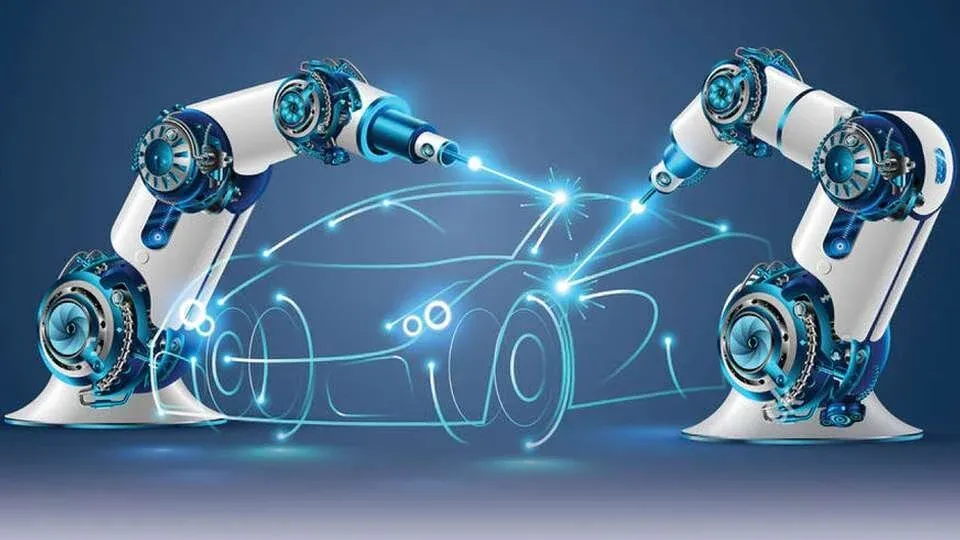
Think about what happens when your phone gets a glitch. You restart it. Sometimes, you update it. Our cars are now much the same. Over-the-air (OTA) updates mean manufacturers can fix bugs, improve performance, and even add features without you ever stepping foot in a service bay. This is a massive shift from the days when a recall or update meant a trip to the dealership.
In 2023, the average new vehicle cost nearly $48,000, a price point that would have been unthinkable a decade ago. Yet, the real story isn't the rising sticker price; it is the invisible revolution happening under the sheet metal. The modern car is no longer a purely mechanical machine. It is a rolling data center, and that shift is redefining everything from how we buy to how we repair. I have spent years with my hands in engine bays, but the skills that matter most today are just as digital as they are mechanical. The pace of this change is staggering, and it is only accelerating. We are not just seeing new models; we are witnessing a complete overhaul of the automotive landscape, driven by forces that touch every single driver.
Software is the New Engine
This change is making engine control unit behavior more complex and more fluid than ever. The vehicle you drive on Monday might behave differently by Friday after a successful software patch. For the owner, this is convenient. For the technician, it requires a new level of diagnostic skill. The old question, "What parts do I need?" is quickly being replaced by "What software version is running?"
Artificial Intelligence and Predictive Maintenance
Your car is learning about you. It monitors your driving habits, analyzes countless data points from the evolution of engine control units, and can now predict when a component is likely to fail before it actually does. This is the core of predictive maintenance. Instead of replacing a part on a fixed schedule, the vehicle itself alerts you to a degradation in performance, saving you from a potential breakdown on the highway.
I have seen the frustration when a warning light pops on for no apparent reason. With AI, the goal is to prevent that light from ever coming on in the first place. It is a fundamental change from reacting to problems to preventing them, a concept that will save drivers both time and money in the long run.
The Rise of the Electric and Hybrid Powertrain
The most visible change is the powertrain. Electric vehicles (EVs) and hybrids are no longer niche products. They are mainstream, and they command a growing share of new car sales. This is not a trend; it is a transition. The internal combustion engine, with its complex systems of pistons, valves, and fuel injection, is being supplemented and in some cases replaced by high-voltage battery packs and electric motors.
This shift is creating a new set of maintenance realities. An EV has fewer moving parts in its drivetrain, which can mean less routine maintenance. However, the high-voltage systems demand specialized training and tooling to handle safely. The conversation around whether EVs are better for the environment is complex, but their impact on the service industry is undeniable. We are trading oil changes for battery diagnostics, and that requires a new knowledge base.
The Core Components of an EV
While the principles of the engine cycle are gone, the fundamentals of vehicle dynamics remain. But now, the heart of the car is the battery pack, and the soul is the power electronics. For everyday drivers, the most practical shift is in daily habits. The idea of "warming up" the car on a cold morning is obsolete for an EV; you are more likely to be pre-conditioning the cabin while it is still plugged in, a practice which can extend your battery's life and range.



Autonomous Technology at Your Fingertips
The term "self-driving" conjures images of sleeping in the back seat, but the reality that is arriving is more incremental. Advanced driver-assistance systems (ADAS) like adaptive cruise control and lane-keeping assist are becoming standard. These systems are not just convenience features; they are the building blocks for a future where the car takes over more of the driving task. I have seen the look of awe on a driver's face the first time their car handles stop-and-go traffic on its own. It is a strange feeling, surrendering control to a computer, but it is also a glimpse into the future.
The goal is safety. According to the NHTSA, the vast majority of crashes are caused by human error. By removing the human from the loop, automated systems have the potential to save tens of thousands of lives a year. However, these systems rely on a network of sensors and cameras that all need to be perfectly aligned and calibrated. Even a simple fender bender can now require a complex recalibration that was unheard of a decade ago.
Connectivity is the New Standard
Our cars are becoming extensions of our digital lives. They are equipped with modems that connect them to the internet, streaming traffic data, music, and software updates. This connectivity is not limited to luxury brands. It is becoming a standard expectation for even the most affordable models. This trend is central to the future of car ownership, where the vehicle is less of a private possession and more of a connected service.
This "always-on" connection also raises questions about data privacy and security. Who owns the data your car generates? How is it being used? These are questions we will all need to grapple with as the technology becomes more pervasive.
The automotive industry is not changing; it has already changed. The cars on the road today are proof of that. The next vehicle you buy will likely be more connected, more efficient, and more automated than anything you have driven before. The driver who understands these shifts will be better equipped to navigate this new landscape. It is an exciting time, full of potential, and the only constant is that the pace of innovation will not slow down.
Comments (0)
Please login to join the discussion
Be the first to comment on this article!
Share your thoughts and start the discussion