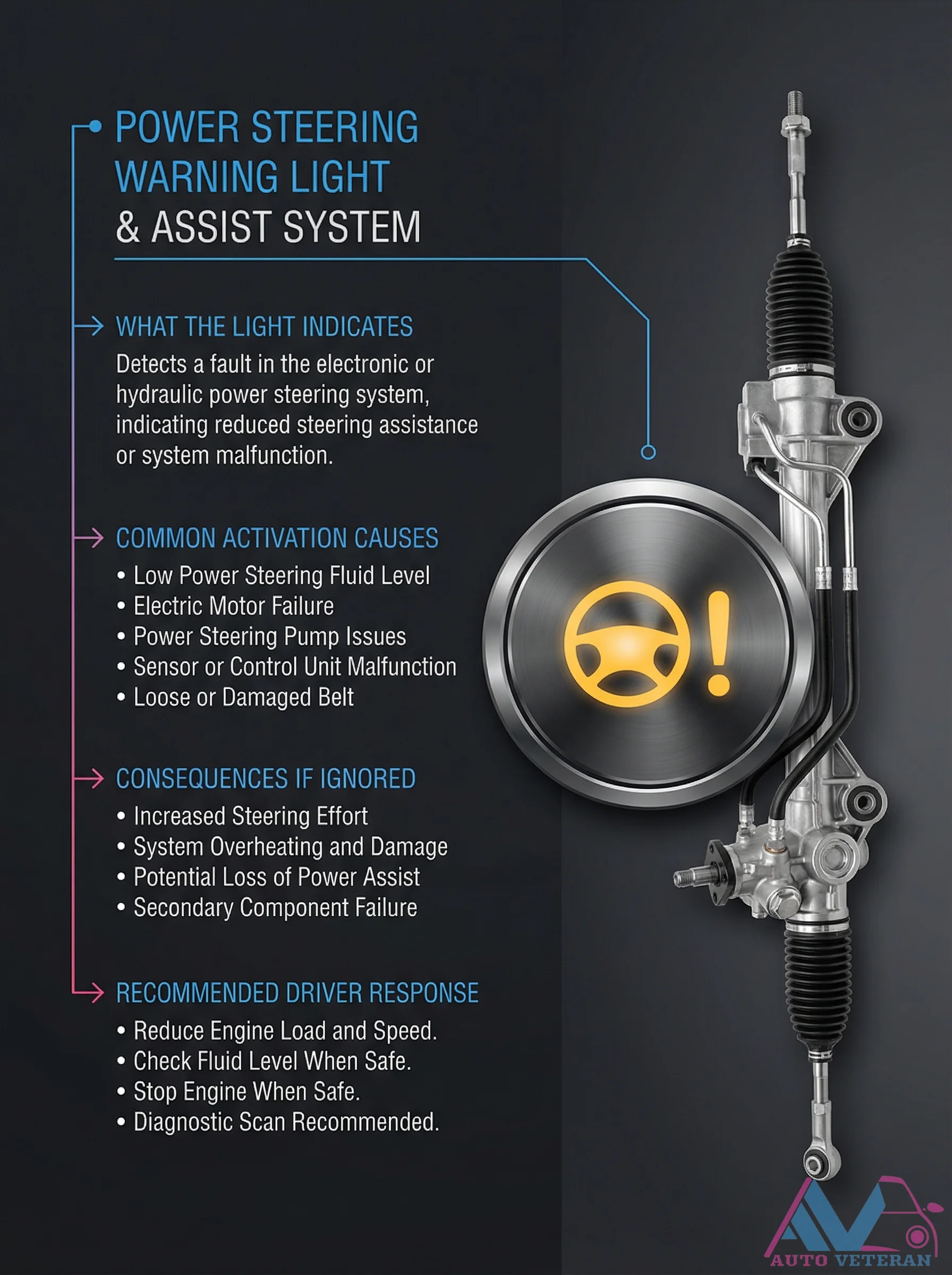
When the power steering warning light illuminates on your dashboard, it signals a fault in the electronic or hydraulic power steering system that requires immediate attention. This warning indicates reduced steering assistance or a complete system malfunction, with common activation causes including low power steering fluid level, electric motor failure, power steering pump issues, sensor or control unit malfunctions, and loose or damaged belts. Ignoring this warning can lead to increased steering effort, system overheating and damage, potential loss of power assist, and secondary component failure. The recommended driver response involves reducing engine load and speed, checking fluid levels when safe, stopping the engine when safe, and obtaining a diagnostic scan to identify the specific issue.
Discover the fascinating origins and name meanings behind luxury car brands like Acura (from Latin acutus meaning sharp), Audi (Latin for listen), BMW (Bavarian Engine Works), Buick (named after David Dunbar Buick), Fiat (Italian Automobile Manufacturer of Turin), and more including Ford, Dodge, Ferrari, Jeep, Kia, Lamborghini, Lexus, Nissan, Peugeot, Renault, and Subaru each with a unique story behind their name.
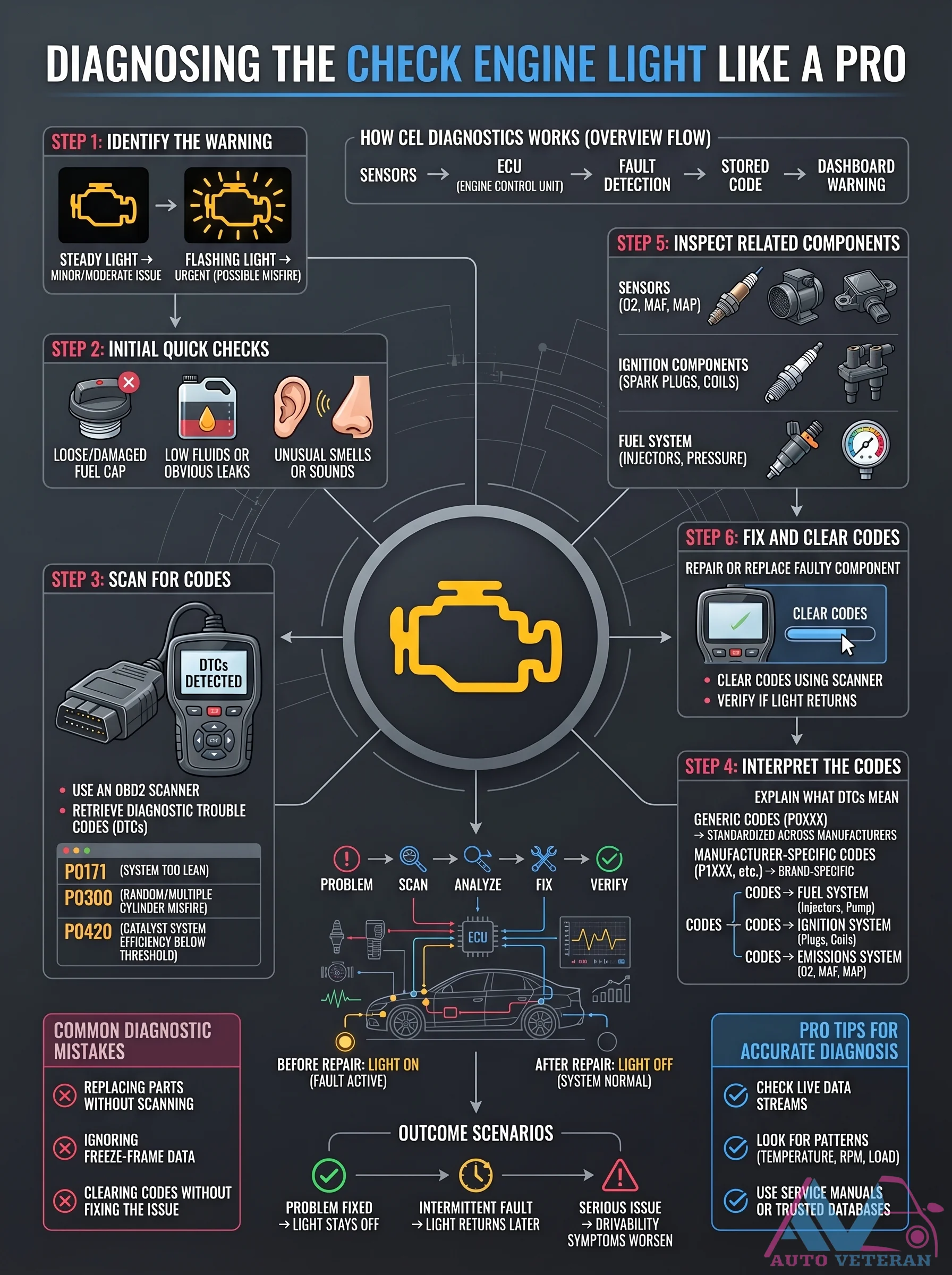
Master the systematic approach to diagnosing check engine light problems like a professional technician. Start by identifying whether the light is steady or flashing, which indicates minor or urgent issues like possible misfires. Perform initial quick checks on ignition components such as spark plugs and coils, inspect the fuel system including injectors and pressure, and look for obvious leaks or unusual smells. Use an OBD2 scanner to retrieve diagnostic trouble codes, distinguishing between generic codes like P0171 for system too lean and manufacturer-specific codes. Interpret these codes to pinpoint problems in systems like fuel, ignition, or emissions, with examples such as P0300 for random misfire or P0420 for catalyst efficiency below threshold. Inspect related components based on code analysis, then repair or replace faulty parts. Clear codes using the scanner and verify if the light returns, ensuring the issue is resolved. Avoid common mistakes like replacing parts without scanning, ignoring live data streams, or clearing codes without fixing the problem. Utilize service manuals and trusted databases for accurate diagnosis, and monitor outcomes to confirm the system returns to normal.