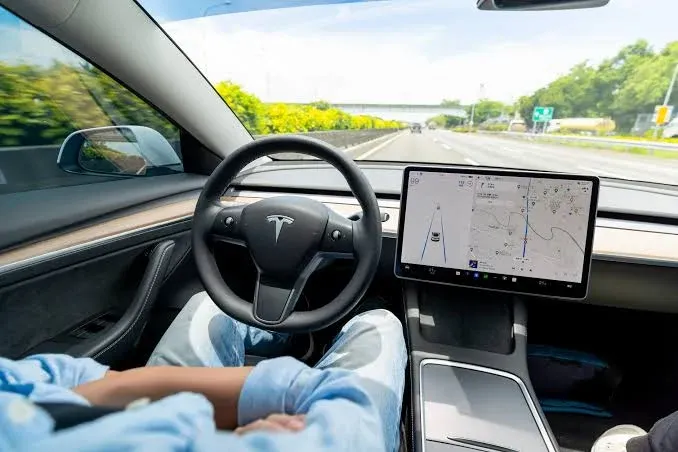
A fee for being on the road is no longer a hypothetical policy paper. It is a letter in the mail with a dollar amount attached.
A Tesla owner’s mailbox just delivered a $500 bill that has nothing to do with a loan payment or a parking ticket. The letter demands payment for road usage, and the reason cited is the one thing an electric vehicle never buys: gas. The driver, according to a report from Motor1, received the notice and the accompanying fee because he does not pay the gas tax that traditionally funds road maintenance. His reaction, summed up in one word, was “INSANE.” The situation is not an isolated billing error. It is the leading edge of a policy shift that every EV driver in the country should be watching closely. States have long relied on the per-gallon fuel tax to pay for highways and bridges. That model worked when every car burned gasoline. It breaks down when a growing share of vehicles plug into a wall outlet instead of a pump. The lost revenue has to come from somewhere, and states are now turning directly to the drivers who are not paying their share at the pump.
The End of the Free Ride on the Road
For years, EV owners enjoyed a quiet financial advantage. They skipped the gas station, avoided oil changes, and, most importantly, dodged the 18.4 cent federal gas tax plus whatever their state tacked on top. That tax is baked into every gallon of fuel. A driver getting 25 miles per gallon pays roughly $0.74 in federal tax alone for every 100 miles driven. An EV driver covering the same distance pays nothing into that fund. State lawmakers noticed. The result is a patchwork of new fees aimed specifically at electric vehicle owners. Some states charge a flat annual registration fee. Others, like the one that sent this $500 letter, are finding ways to bill for miles driven. The concept is called a road usage charge, and it treats the road like a utility. You use it, you pay for it, regardless of what powers your wheels.

Duracell CR2025 3V Lithium Battery, Child Safety Features, 2

Tosiicop 9.6V 2400mAh NiMH Battery - RC Car Rechargeable Bat

HOSIM RC Car Upgraded Electronic Speed Controller Assembly A

FOXWELL NT726 Bidirectional Scan Tool, All System OBD2 Scann
Why the Bill Feels So Harsh
The shock of a $500 demand letter is understandable. Most drivers never see a direct bill for road maintenance. Gas tax is invisible, collected at the wholesale level and passed along in the price per gallon. When that cost becomes a line item addressed to your home, it feels like a new tax rather than a rebalanced one. The driver in the Motor1 report called it insane, and from a household budget perspective, it is easy to see why. An unexpected $500 charge lands like a small emergency. There is also a fairness argument that EV owners are quick to raise. They were encouraged to buy electric vehicles with tax credits and environmental messaging. Now they are being asked to pay a fee that, in some cases, exceeds what a comparable gas car contributes annually in fuel taxes. That math can feel punitive rather than equitable.
What This Means for Everyday Drivers
This story is not only about one Tesla owner’s mail. It is a preview of how transportation funding is being rethought across the country. The gas tax is a declining revenue source. Fuel economy standards keep improving, hybrid sales keep climbing, and battery electric vehicles keep taking market share from internal combustion models. Every one of those trends means fewer gallons sold and less money for roads. States are experimenting with different solutions. Some have implemented flat annual EV fees that range from $50 to over $200. Others are piloting mileage-based programs that use odometer readings or telematics to calculate a per-mile charge. The federal government has studied the idea for years without implementing it. The letter that sparked this story suggests that some jurisdictions are moving faster than others, and the amounts can be substantial. The broader point for anyone who drives, whether in a gasoline powered sedan or a battery electric vehicle, is that the funding model is changing. Road maintenance is not free. Someone pays for it. The question is whether that someone is a driver paying at the pump, an EV owner receiving a bill in the mail, or a taxpayer covering the shortfall through general funds.
Planning for the New Reality
If you drive an EV, the days of skipping road use charges are numbered. Check your state’s current rules before you buy or renew registration. Some states have already folded the EV fee into annual registration costs, which makes it less of a surprise but no less real. Others, as this case shows, may bill separately. Budgeting for that expense is now part of EV ownership. If you drive a gas car, this story matters too. The revenue gap created by EV adoption does not disappear. If states cannot collect enough from fuel taxes and EV fees, they will look for other sources. That could mean higher registration costs, toll increases, or general fund transfers that compete with other public services. The fuel efficiency of your vehicle suddenly has a direct connection to how much you contribute to road upkeep.
What Comes Next
The transition from gas tax to mileage based fees will not happen overnight. There are privacy concerns with tracking miles, administrative costs with collecting the fees, and political resistance to any new charge that voters can see. But the direction is clear. The gas tax is a 20th century solution to a 21st century transportation problem. The driver who received the $500 letter is caught in the middle of that transition. He bought a car that does not use gasoline, and now he is being charged as if the road itself carries a toll. The emotional response is understandable. The policy logic, however cold, is also understandable. Roads wear out based on vehicle weight and miles driven, not based on what fuel the engine burns. For everyday drivers, the takeaway is practical. Understand how your state funds road maintenance. Know whether your EV registration includes a road usage fee. Recognize that the cost of driving is not disappearing, it is being redistributed. The gas pump used to hide that cost in the price per gallon. The new system puts it in plain sight, and as this Tesla owner learned, plain sight can be a rude awakening. The debate over who pays for roads and how much will continue for years. What is no longer debatable is that EV drivers are now part of that conversation, whether they asked for it or not. The letter demanding $500 is not the end of the story. It is the opening chapter.

Comments (0)
Please login to join the discussion
Be the first to comment on this article!
Share your thoughts and start the discussion